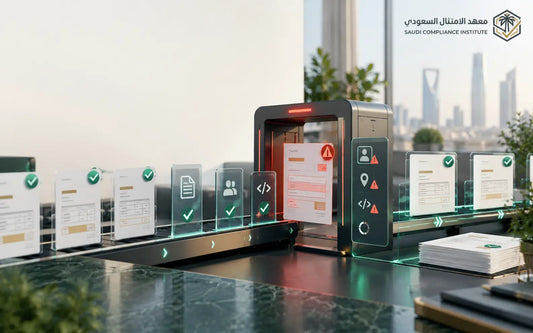
Saudi hospitality is becoming more competitive, more international, and more closely watched. Hotels in Riyadh, Jeddah, Makkah, Madinah, the Red Sea, and giga-project destinations are no longer judged only by room quality or guest service. They are also judged by how safely, legally, and professionally they operate.
That is why Saudi Hospitality Regulatory Compliance is becoming a competitive advantage in 2026. New occupational health requirements, medical fitness expectations, building safety standards, Saudization updates, and staff well-being responsibilities are reshaping how hotels manage risk.
For hotel general managers, compliance officers, HR directors, and safety leaders, the goal is not to fear regulation. The goal is to use compliance as a trust signal: safe staff, safe guests, stronger brand reputation, and smoother inspections.
Disclaimer: This article is for general educational purposes only. Saudi labor, occupational health, tourism, and safety requirements may change. Hotels should confirm obligations with official authorities or qualified legal, HR, and safety advisers.
The April 2026 Enforcement: Understanding the New Occupational Health Law
 The biggest 2026 shift for hotel employers is the move toward formal occupational fitness and non-communicable disease examinations. The regulation is commonly connected with Ministerial Decision 33232, which adopted the Regulation of Occupational Fitness and Non-Communicable Diseases Examinations and stated that it would come into force 180 days after publication in the official gazette.
In practice, this means employers must think differently about workforce health. Occupational health is no longer only about responding when an employee becomes injured or unwell. It now includes earlier screening, job fitness evaluation, and stronger health documentation.
The National Council for Occupational Safety and Health explains that the regulation aims to enable early detection of non-communicable diseases, improve worker health, reduce occupational injuries and diseases, and ensure that suitable individuals are selected for sensitive professions. (المجلس الوطني للسلامة والصحة المهنية)
For hospitality, this matters because hotels are people-heavy operations. A single property may include front office teams, chefs, cleaners, lifeguards, drivers, maintenance staff, security teams, spa staff, laundry workers, supervisors, and contractors. Each role carries different physical, health, and safety demands.
A solution-oriented hotel should begin with one question:
Do we know which roles require stronger occupational health controls before onboarding or reassignment?
That question is now central to Occupational Health and Safety (OHS) KSA planning.
High-Risk vs. Standard Roles: Where Does Your Hotel Staff Fall?
Not every hotel job carries the same risk. A receptionist, chef, maintenance technician, pool attendant, driver, housekeeping employee, lifeguard, and security guard all work in different risk environments.
The NCOSH Regulation on the Organization of Work in High-Risk Occupations states that employers are responsible for monitoring workers to undergo the necessary training and occupational medical fitness examinations, preventing workers from performing high-risk tasks without valid permits, and ensuring preventive and protective measures are applied.
For hotels, this means HR and safety teams should map roles by exposure, not only by department.
|
Hotel Role Type |
Possible Risk Area |
Compliance Question |
|
Maintenance staff |
Electrical, mechanical, height, confined spaces |
Does the role require medical fitness or specific training? |
|
Kitchen teams |
Heat, cuts, slips, food hygiene, long shifts |
Are health and safety controls documented? |
|
Housekeeping |
Chemical handling, manual lifting, repetitive work |
Are ergonomic and chemical controls in place? |
|
Drivers |
Road risk, fatigue, guest transport |
Are fitness and licensing requirements checked? |
|
Lifeguards / pool staff |
Rescue readiness, drowning prevention |
Are certifications and fitness checks current? |
|
Security staff |
Crowd control, emergency response |
Are training and licensing requirements monitored? |
This is where Saudi Hospitality Regulatory Compliance becomes practical. It is not enough to say, “We train our staff.” Hotels need a role-based compliance matrix showing who needs what training, what medical checks, what permits, and what renewal dates.
A course such as Occupational safety and regulatory compliance in Saudi hospitality can help hotel teams connect occupational safety duties with daily hospitality operations, especially where HR, safety, and department managers need a shared compliance language.
The “Fitness for Work” Certificate: A New Requirement for Onboarding
 The new occupational fitness direction affects onboarding. Hotels can no longer treat employment medical checks as a basic administrative step. They need a structured process that matches medical fitness with job demands.
The NCOSH occupational fitness regulation states that examinations for workers in high-risk professions are divided into categories and must follow approved forms and standards. It also notes that results are handled according to the regulation, and that occupational health records are confidential and subject to privacy and data governance controls.
For hotel HR teams, this creates three important responsibilities.
First, the hiring process must identify whether a role requires general, specialized, or periodic fitness checks. Second, the hotel must coordinate examinations through appropriate occupational health channels. Third, the hotel must protect employee health records carefully.
This is especially important for hospitality because staff may move between departments. A worker hired for one role may later transfer into a physically demanding or safety-sensitive position. That transfer may trigger a different fitness requirement.
A strong onboarding workflow should include:
-
Job risk classification before offer finalization.
-
Medical fitness requirement check.
-
Clear candidate communication.
-
Approved examination pathway.
-
Confidential record handling.
-
Renewal or periodic examination tracking.
-
Return-to-work review after illness or injury where required.
The best hotels will treat fitness-for-work as part of employee care, not just paperwork.
That tone matters. Employees should understand that occupational fitness is about safety, suitability, and prevention, not punishment.
SBC & Civil Defense: Structural Safety Standards for Giga-Projects
Hotel compliance is not only about people. It is also about the physical environment.
Riyadh hotels, Jeddah waterfront properties, Red Sea resorts, entertainment destinations, and giga-project hospitality assets must pay close attention to building safety, fire protection, accessibility, evacuation, electrical systems, and maintenance controls.
The Saudi Building Code provides the national framework for building safety requirements across areas such as structural, electrical, mechanical, energy, sanitary, fire protection, and existing-building standards.
For hospitality, this means safety teams should not work separately from engineering and facilities teams. A beautiful lobby does not compensate for weak evacuation planning. A luxury room does not compensate for poor fire safety controls. A smart building system does not compensate for incomplete maintenance records.
A practical hotel compliance review should check:
|
Safety Area |
Hotel Compliance Focus |
|
Fire protection |
Alarms, extinguishers, sprinklers, evacuation routes |
|
Electrical systems |
Inspection, load control, maintenance documentation |
|
Mechanical systems |
HVAC, lifts, ventilation, plant rooms |
|
Accessibility |
Safe guest movement and emergency access |
|
Back-of-house areas |
Kitchens, laundry, storage, chemicals, loading zones |
|
Contractor work |
Permits, supervision, risk assessments |
For investors, this is especially important. Giga-project hospitality assets are not only tourist facilities. They are long-term investment assets. Strong structural and operational compliance protects brand value and reduces downtime.
Mental Health and Well-being: The 2026 Holistic Compliance Shift
 The new occupational health direction also signals a wider change: compliance is becoming more holistic.
Hospitality work can be physically and emotionally demanding. Employees may face long shifts, guest complaints, peak-season pressure, night work, fatigue, heat exposure, and multicultural team dynamics. If management only focuses on physical accidents, it may miss major risk factors affecting performance and safety.
The occupational fitness regulation’s focus on worker health and non-communicable disease screening shows that Saudi workplace health is moving beyond narrow accident response. The goal includes prevention, health monitoring, and improved quality of life for workers.
For hotels, mental health and well-being should be built into safety culture.
That does not mean turning hotel managers into clinicians. It means creating work systems that reduce avoidable harm. Examples include fair scheduling, fatigue monitoring, respectful reporting channels, supervisor training, safe accommodation standards where relevant, hydration and heat-risk controls, and early support when staff show stress signs.
A practical well-being plan can include:
-
Fatigue-risk review for night shifts and peak seasons.
-
Supervisor training on respectful communication.
-
Clear incident and near-miss reporting.
-
Anti-harassment and grievance channels.
-
Heat stress and hydration controls for outdoor staff.
-
Support after serious guest incidents or workplace injuries.
In 2026, a safe hotel is not only a place where guests are protected. It is a workplace where employees can perform safely and sustainably.
Nitaqat Evolved 2026–2028: Linking Saudization to Workplace Safety
Hospitality leaders should also connect safety compliance with workforce planning.
Saudi Arabia has launched a new phase of the Nitaqat program for 2026–2028. Fragomen reports that the new phase became effective from 26 April 2026, with revised Saudization requirements and changes to thresholds across many sectors.
For hotels, this matters because Saudization is not just a recruitment target. It affects staffing models, training plans, role readiness, succession planning, and internal development.
If a hotel hires more Saudi nationals into front office, guest relations, safety, operations, HR, administration, and supervisory tracks, it must also invest in training and safe role design. Saudization without workplace readiness creates performance pressure. Saudization with strong safety and compliance systems creates long-term capability.
This is where Nitaqat Evolved 2026 Compliance and Saudi Hospitality Regulatory Compliance connect.
A stronger hotel approach should include:
-
Mapping Saudization targets by department.
-
Aligning Saudi hiring with role training.
-
Including safety induction for every new employee.
-
Developing Saudi supervisors in OHS awareness.
-
Tracking fitness-for-work and training requirements.
-
Ensuring contractors do not become a hidden compliance gap.
The best hotels will not treat Saudization, OHS, and HR compliance as separate files. They will manage them as one workforce governance system.
The Compliance Audit: 5 Steps to Avoiding the 2026 Penalties
 The easiest way to reduce penalties is to stop treating compliance as a last-minute inspection exercise.
Hotels in Riyadh and Jeddah can turn the 2026 regulatory shift into a competitive advantage by building a simple, repeatable audit routine.
Step 1: Build a Role-Based Compliance Matrix
List every hotel role. Identify medical fitness needs, high-risk exposure, required training, certificates, permits, and renewal dates.
This should include employees and key outsourced roles such as security, cleaning, maintenance, drivers, lifeguards, and food-service contractors.
Step 2: Review Onboarding and Transfer Procedures
Check whether HR verifies role requirements before hiring, transfer, promotion, or reassignment. A change from office work to operational work may require different controls.
Step 3: Check Building and Operational Safety
Review fire safety, emergency routes, kitchen safety, chemical handling, pool safety, beach operations if applicable, contractor controls, and maintenance records.
Step 4: Create a Confidential Health Record Process
Medical fitness records should not be casually stored in shared folders. The NCOSH occupational fitness regulation includes confidentiality and data protection expectations for occupational health records. (المجلس الوطني للسلامة والصحة المهنية)
Step 5: Run Monthly Compliance Reviews
Monthly reviews should cover incidents, near misses, training gaps, expired certificates, contractor issues, inspection findings, corrective actions, and upcoming deadlines.
A practical audit dashboard can look like this:
|
Audit Area |
Monthly Question |
|
Medical fitness |
Are all required checks completed and valid? |
|
Training |
Are high-risk roles trained and documented? |
|
Building safety |
Are inspections and corrective actions closed? |
|
Contractors |
Are outsourced teams compliant? |
|
Incident reporting |
Are near misses reviewed and acted on? |
|
Saudization |
Are staffing plans aligned with Nitaqat changes? |
|
Records |
Can we prove compliance if inspected? |
This is where structured learning becomes valuable. For hotels preparing for 2026 inspections, workforce health requirements, and safer operations, Occupational safety and regulatory compliance in Saudi hospitality can support managers who need to translate rules into daily hotel practice.
Conclusion
Saudi Hospitality Regulatory Compliance in 2026 is not only about avoiding penalties. It is about building safer hotels, healthier teams, stronger guest trust, and more reliable operations.
The April 2026 occupational fitness shift, high-risk role requirements, Saudi Building Code expectations, employee well-being focus, and Nitaqat Evolved updates all point in the same direction: hospitality employers need better systems.
The hotels that lead in Riyadh, Jeddah, and Saudi tourism destinations will not be the ones that react after inspections. They will be the ones that prepare early, document clearly, train consistently, and treat compliance as part of the guest experience.
FAQs
What is Saudi Hospitality Regulatory Compliance?
Saudi Hospitality Regulatory Compliance means meeting the legal, health, safety, labor, building, tourism, and workforce requirements that apply to hotels, resorts, restaurants, and hospitality operators in Saudi Arabia.
What changed in April 2026 for occupational health in Saudi Arabia?
Saudi Arabia moved toward stronger occupational fitness and non-communicable disease examination requirements. Employers must pay closer attention to employee fitness for work, especially in high-risk or sensitive occupations.
Do hotel staff need mandatory medical fitness examinations in Saudi Arabia?
Some roles may require medical fitness examinations depending on risk level, job duties, transfer, or regulatory classification. Hotels should review each role and confirm requirements with official guidance or qualified advisers.
What hotel roles may be considered higher risk?
Roles involving maintenance, driving, lifeguarding, pool operations, kitchen hazards, chemicals, security, heavy lifting, or emergency response may need closer review. The exact classification depends on official occupational risk criteria.
How does the Saudi Building Code affect hotels?
The Saudi Building Code affects hotel safety through requirements related to fire protection, electrical systems, mechanical systems, accessibility, emergency routes, and existing-building safety. Hotels should connect engineering, facilities, and safety teams.
How can hotels avoid hospitality compliance penalties in 2026?
Hotels can reduce risk by mapping roles, tracking medical fitness and training, maintaining building safety records, auditing contractors, managing confidential health records properly, and running monthly compliance reviews.