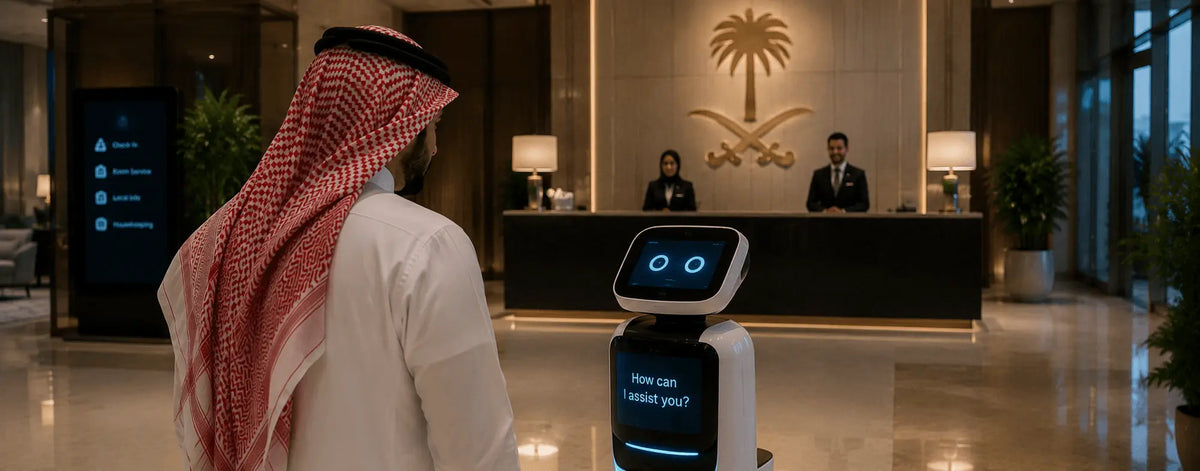
Saudi hospitality is entering a new safety era. In the past, hotel safety often meant checklists, inspections, incident logs, and staff training after a problem happened. In 2026, that approach is no longer enough. Hotels, resorts, beach operators, restaurants, and giga-project destinations now need systems that can predict risk before it becomes an incident.
This is where AI and Vision 2030 meet. Saudi Arabia’s tourism growth, smart-city development, digital infrastructure, and national AI direction are pushing hospitality safety from reactive compliance to intelligent, real-time risk management. For hotel general managers, safety directors, and investors, the new question is not “Do we meet the minimum rule?” It is: Can we prove that our safety system is smart, connected, and ready for tomorrow’s guests?
The 2026 Paradigm Shift: From Static Rules to Ambient Safety
Traditional hospitality safety is usually static. A checklist is completed. A fire extinguisher is inspected. A lifeguard shift is assigned. A CCTV camera records footage. These controls still matter, but they are no longer the full picture.
The new model is ambient safety. This means safety is built into the guest environment through sensors, cameras, analytics, automated alerts, digital reporting, and staff response workflows. A smart hotel does not wait for an incident report. It detects weak signals early.
For example, AI can flag crowding near pool areas, detect unusual movement in restricted zones, identify smoke or heat patterns, alert teams to wet-floor risks, and monitor maintenance issues before they affect guests. In high-end resorts, this level of monitoring can improve both compliance and guest confidence.
Saudi Arabia’s 2026 focus on artificial intelligence supports this shift. SDAIA issued the official Year of Artificial Intelligence 2026 guidelines to unify national efforts, raise awareness of AI technologies, and promote high-impact AI initiatives. This gives hospitality leaders a clear signal: AI is becoming part of Saudi Arabia’s wider business and public-sector transformation.
The gold standard is changing: safety is no longer just written in a manual. It is embedded in the environment.
Agentic AI: The New First Responder in Saudi Hotels
 The next step in hospitality safety is not only AI that watches. It is AI that acts.
Agentic AI refers to systems that can monitor conditions, analyze risk, trigger alerts, suggest next steps, and support human decision-making. In hotels, this could mean an AI system that detects overcrowding in a lobby, alerts security, notifies the duty manager, and recommends opening another entrance or redirecting guests.
This does not replace trained staff. In hospitality, human judgment remains essential. But AI can shorten the time between risk detection and response.
Practical use cases include:
-
AI-powered surveillance for suspicious movement, overcrowding, or unsafe behavior.
-
Predictive maintenance alerts for elevators, HVAC, kitchen equipment, and fire-safety systems.
-
Automated escalation when a guest safety incident is logged.
-
Smart dashboards for safety directors and hotel leadership.
-
Digital evidence trails for audits and insurance review.
This is where training becomes important. A course such as Occupational safety and regulatory compliance in Saudi hospitality can help hospitality teams understand how traditional safety controls and AI-enabled systems should work together without losing the human side of guest care.
The aim is not to create a hotel that feels over-monitored. The aim is to create a hotel where guests feel protected because risks are managed quietly and professionally.
Smart Infrastructure & The Saudi Building Code
AI cannot fix weak infrastructure. A hotel can have the best surveillance analytics in the world, but if fire exits, accessibility, ventilation, electrical systems, and maintenance controls are weak, the safety system is incomplete.
That is why smart hospitality safety must still align with physical safety standards. The Saudi Building Code includes fire protection and life-safety requirements through SBC 801, which supports safer building design, emergency planning, and protection systems. Hospitality operators should treat the Saudi Fire Protection Code requirements as part of their safety foundation before adding advanced monitoring tools.
For hospitality operators, this means AI should be layered on top of compliant infrastructure, not used as a shortcut. Smart cameras, occupancy sensors, digital access systems, and energy monitoring tools should support building safety and guest comfort.
A practical hotel safety model should connect three layers:
|
Safety Layer |
What It Covers |
AI Role |
|
Physical infrastructure |
Fire safety, exits, accessibility, utilities |
Detect faults and support maintenance alerts |
|
Operational controls |
Staff training, checklists, incident response |
Automate reminders and escalation |
|
Predictive intelligence |
Patterns, risk signals, crowd behavior |
Identify risks before incidents occur |
Hotels that connect these layers can move from basic compliance to Predictive Risk Management.
Biosecurity & Health Tech: Lessons from 2026 Travel Alerts
 Hospitality safety is no longer only about fire, slips, food hygiene, or pool incidents. Health security is now part of the guest trust equation.
After recent years of global health alerts, hotels have learned that disease control, sanitation, air quality, isolation procedures, and staff readiness can affect reputation quickly. A single poorly managed health incident can damage guest confidence, especially in luxury resorts, conferences, pilgrimage-related accommodation, and international tourism destinations.
AI and health tech can support hospitality biosecurity through:
-
Occupancy and crowd-density monitoring.
-
Smart cleaning schedules based on usage.
-
Indoor air quality sensors.
-
Digital incident reporting for illness complaints.
-
Contactless check-in and service workflows.
-
Food safety temperature monitoring.
This does not mean every hotel needs a hospital-grade system. It means hospitality leaders should treat health risk as part of safety planning. In Saudi Arabia, where tourism growth is linked to international visitors, major events, and high-traffic destinations, health readiness is now a business requirement.
Guest trust is built when safety, hygiene, and response systems work before the guest has to ask.
Coastal Safety: The 2026 Mandatory Beach Regulations
Beach resorts and coastal destinations are becoming more important in Saudi tourism. That growth brings a new safety challenge: beaches are open, dynamic, and harder to control than indoor hotel spaces.
In January 2026, Saudi Arabia introduced new rules for beach operators through the Saudi Red Sea Authority. The framework includes requirements related to licensing, safety, environmental controls, infrastructure, lifeguards, safety equipment, swimming zones, signage, and incident reporting. The Saudi Press Agency reported that the new framework mandates licensed lifeguards, comprehensive equipment, and an incident reporting system to support continuous improvement.
For hospitality investors and resort operators, this is a clear signal. Coastal tourism safety is becoming more formal, more measurable, and more connected to regulatory expectations.
AI can help beach operators by supporting:
-
Real-time crowd monitoring.
-
Swim-zone boundary alerts.
-
Weather and wave-risk notifications.
-
Lifeguard deployment planning.
-
Incident logging and trend analysis.
-
Guest behavior monitoring near restricted zones.
But AI does not remove the need for visible human safety. Beaches still need trained lifeguards, clear signs, rescue equipment, emergency procedures, and guest education.
The strongest beach safety systems combine regulation, human readiness, and smart monitoring.
The Cybersecurity Frontline: Protecting the Smart Guest
 The smarter the hotel, the bigger the cybersecurity responsibility.
Smart hotels collect and process sensitive data: guest identities, payment details, room access records, Wi-Fi usage, CCTV footage, loyalty profiles, and sometimes health or preference data. When AI is added to the environment, the risk expands further.
Smart Hotel Cybersecurity is now part of hospitality safety. A guest may not see it, but it protects their trust.
Hotels should consider cybersecurity risks in:
-
Smart locks and access control systems.
-
Guest Wi-Fi networks.
-
CCTV and surveillance systems.
-
Payment systems.
-
Booking platforms.
-
Vendor integrations.
-
AI analytics tools.
-
Cloud-based guest management systems.
A smart hotel is only safe if its systems are secure. If guest data is exposed, or if access systems are compromised, the damage is not only technical. It becomes reputational, legal, and commercial.
The National Cybersecurity Authority provides national cybersecurity controls and guidance for Saudi organizations, including the Essential Cybersecurity Controls, which support cybersecurity governance and risk management. Smart hospitality leaders should treat these controls as part of the safety conversation, not only an IT concern.
In modern hospitality, guest safety includes digital safety.
The ROI of Safety: How AI Compliance Drives Global Investment
For investors, safety is not only a compliance cost. It is a value driver.
Saudi hospitality is competing for global tourists, international operators, luxury brands, entertainment visitors, events, and giga-project investors. These stakeholders want confidence that hotels and resorts can meet high safety expectations consistently.
The Ministry of Tourism’s National Tourism Monitoring Platform supports this wider direction by giving tourism investors and stakeholders access to tourism sector data and monitoring tools. It reflects a broader move toward data-driven tourism governance and investment visibility. (Ministry of Tourism)
AI-enabled safety can support ROI in several ways:
|
Safety Investment |
Business Value |
|
Predictive maintenance |
Reduces downtime and emergency repairs |
|
AI surveillance |
Improves incident prevention and response |
|
Smart occupancy monitoring |
Reduces crowd risk and improves guest flow |
|
Digital incident reporting |
Improves audit readiness and insurance evidence |
|
Cybersecurity controls |
Protects guest trust and brand reputation |
|
Compliance dashboards |
Supports investor confidence and executive oversight |
The return is not only fewer accidents. It is stronger trust, smoother operations, better brand protection, and more confidence from regulators, investors, and guests.
This is why hospitality leaders should treat Saudi Hospitality Safety Standards 2026 as a strategic issue. AI-driven safety is not just an operations upgrade. It is part of the investment story.
Practical Safety Checklist for Hospitality Leaders
 Before investing in AI tools, hotel and resort leaders should ask:

-
Do we understand the main safety risks across guest areas, kitchens, pools, beaches, rooms, and back-of-house operations?
-
Are our physical safety systems aligned with building and tourism requirements?
-
Do our AI tools support staff decisions rather than replace them?
-
Are incident reports digital, searchable, and reviewed regularly?
-
Are cybersecurity controls included in smart-hotel planning?
-
Do we have clear response workflows for health, fire, beach, food, and guest incidents?
-
Can we show investors and regulators how our safety system improves over time?
If the answer is unclear, the first step is not buying more technology. It is building a safety framework that technology can strengthen.
For hotels, restaurants, and resorts preparing for smarter compliance, Occupational safety and regulatory compliance in Saudi hospitality can support teams in understanding the operational foundations behind safe guest environments before layering AI and digital monitoring tools on top.
Conclusion
AI and Vision 2030 are redefining hospitality safety in Saudi Arabia. The future is not reactive. It is predictive, connected, and evidence-driven.
Hotels and resorts can no longer rely only on static checklists and after-the-fact reporting. They need smart infrastructure, trained teams, secure systems, health readiness, coastal safety controls, and AI-supported monitoring that protects guests without disrupting the hospitality experience.
The new gold standard is clear: safe hospitality is not only about responding well when something happens. It is about knowing enough to prevent it.
FAQs
How are AI and Vision 2030 changing hospitality safety in Saudi Arabia?
AI and Vision 2030 are shifting hospitality safety from reactive inspections to predictive systems. Hotels can use AI to monitor risks, improve response times, support compliance, and build guest trust.
What is predictive risk management in hotels?
Predictive risk management means using data, sensors, AI, and reporting systems to identify risks before they become incidents. It can support maintenance, crowd control, guest safety, and emergency planning.
What are the 2026 beach safety rules in Saudi Arabia?
Saudi Arabia introduced new beach operator requirements in 2026 covering licensing, safety equipment, trained lifeguards, swimming zones, signage, infrastructure, and incident reporting for official beach operations.
Why is cybersecurity important for smart hotels?
Smart hotels depend on connected systems such as guest Wi-Fi, smart locks, booking systems, payment platforms, CCTV, and AI tools. Cybersecurity protects guest data, operations, and brand trust.
How can AI improve hotel guest safety?
AI can detect crowding, suspicious movement, unsafe behavior, equipment faults, air quality risks, and maintenance issues. It can also support faster alerts, better incident records, and stronger management oversight.
Is AI enough to meet hospitality safety requirements?
No. AI supports safety, but it does not replace trained staff, clear procedures, compliant infrastructure, emergency planning, cybersecurity, and leadership accountability.