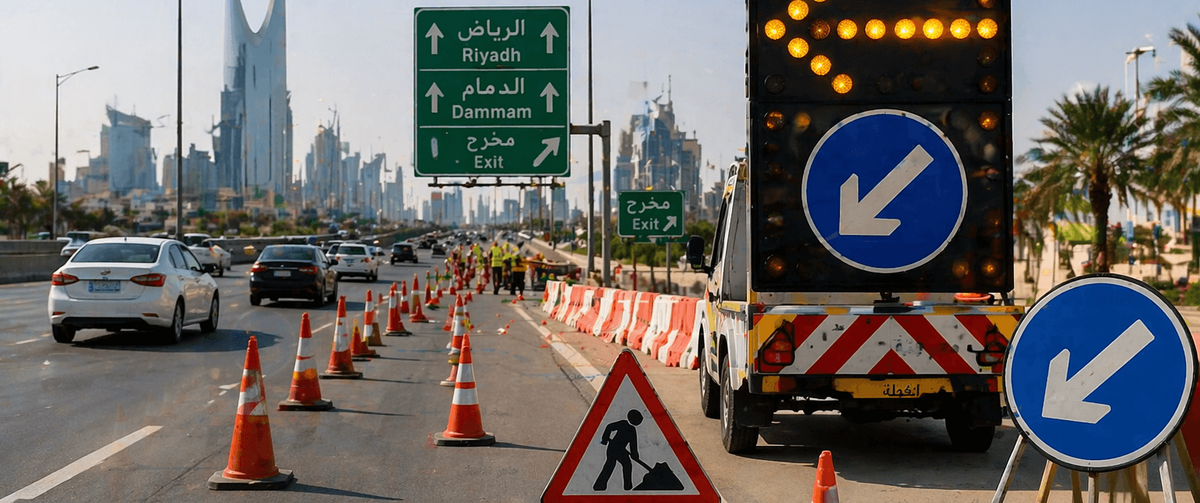
A road closure can happen in hours. A bad diversion can cause problems in minutes. But a well-prepared plan can prevent confusion before the first cone is even placed. That is why traffic management plans in KSA matter so much today. In Saudi Arabia, roads, utilities, construction access, maintenance works, and event-related diversions all change how vehicles and pedestrians move. When that movement is not planned properly, risk rises fast for workers, drivers, and the public. Saudi guidance now treats work zone traffic control and traffic management as structured technical areas, not informal site decisions.
This guide explains what a traffic management plan is, why it matters in Saudi Arabia, and what a good plan should include from the start.
What Is a Traffic Management Plan?
In simple terms, a traffic management plan is a structured plan for controlling how vehicles, pedestrians, access routes, and temporary traffic measures will work during construction, maintenance, utilities activity, road closures, or special events. For traffic management plans in KSA, the idea is not just to keep traffic moving. It is to keep people safe while reducing disruption and confusion.
Saudi official guidance helps frame this clearly. SHC 101 points users to SHC 305 for Work Zone Design, SHC 602 for the Manual on Uniform Traffic Control Devices, and SHC 601 for Traffic Engineering when traffic needs to be managed on Saudi highways and roads. That shows a traffic management plan is part of a bigger control system, not a one-page note for site teams.
Quick fact box
A traffic management plan usually covers:
-
entry and exit routes
-
lane changes or closures
-
detours and diversions
-
pedestrian movement
-
signs, cones, and barriers
-
responsible personnel
-
emergency access
-
monitoring as conditions change
Why Traffic Management Plans Matter in KSA
The reason traffic management plans in KSA matter is simple: Saudi Arabia is building, upgrading, and maintaining at scale. That creates more situations where normal traffic flow changes around active works. A clear plan helps protect workers, guide drivers, reduce delays, and support smoother operations.
This is not only a site issue. It is also part of the Kingdom’s wider road-safety picture. Vision 2030’s annual reporting highlights a 95% safety rate for traffic diversions and work zones, showing that temporary traffic safety is already being tracked as a national outcome. At the same time, the Saudi Road Code provides a unified technical reference for traffic control, work zone design, and traffic operations.
There is also strong Saudi research behind the need for better planning. A 2022 study on temporary work zones in Saudi Arabia found that road work zones raise crash risk and that stronger safety countermeasures are needed to control the main risk factors affecting both workers and road users.
What Should a Traffic Management Plan Include?
This is the question most readers are really asking. For traffic management plans in KSA, a good plan should be practical, site-specific, and easy for teams to follow.
1. Scope of work
The plan should explain what work is happening, where it is happening, and for how long. A road resurfacing job, a utility trench, a construction gate, and a special event closure all create different traffic risks.
2. Site layout and traffic flow
A strong plan shows how vehicles and pedestrians will move. That includes entry points, exits, lane changes, detours, crossing points, restricted areas, and any separation between public traffic and work activity.
3. Temporary traffic control devices
A plan should state what devices are needed and where they will be placed. Saudi guidance gives a formal role to traffic control devices and their selection, installation, and maintenance. That means signs, cones, barriers, markings, and warning devices should not be left to guesswork.
4. Roles and responsibilities
The plan should make it clear who is supervising, who is controlling movement, and who responds when site conditions change. This is where frontline roles become critical.
5. Emergency access and incident response
A good traffic management plan should protect access for emergency vehicles and explain how the site will respond if traffic backs up, conditions change, or an incident happens.
Traffic Management Plan vs Traffic Control Plan
These terms are often used together, but they are not always the same. In practice, traffic management plans in KSA are usually broader than a traffic control plan.
|
Term |
Main focus |
Typical contents |
|
Traffic management plan |
Overall traffic strategy |
access, routes, pedestrians, responsibilities, staging, emergency access |
|
Traffic control plan |
Physical control measures |
signs, cones, barriers, lane closures, device placement |
That distinction matters because many service pages blur the two. Some Saudi service providers even market traffic diversion plans, traffic management plans, and traffic control plans together, which shows the terms overlap commercially, even if their scope differs in practice.
Who Needs a Traffic Management Plan in Saudi Arabia?
Not every site needs the same level of detail, but many activities in the Kingdom clearly benefit from one. For traffic management plans in KSA, the need usually grows when traffic patterns change, public access is affected, or live vehicle movement sits close to active works.
Common examples include:
-
roadworks and highway maintenance
-
civil construction projects
-
utilities and telecoms works
-
industrial sites and shutdowns
-
warehouse and logistics yards
-
municipal maintenance operations
-
large events with road closures or diversions
Saudi planning guidance for special events makes this even clearer. It discusses transport planning, public messaging, detours, local access, and the need to coordinate road construction work zones early in the event planning process.
Why Frontline Training Still Matters
Even the best-written plan can fail if people on the ground do not understand how to apply it. That is why traffic management plans in KSA depend on more than paperwork. They also depend on clear roles, safe signalling, hazard awareness, and consistent movement control at site level.
This is where a practical course can add value. If your teams need stronger frontline awareness around diversions, access control, and live vehicle movement, your Flagman & Traffic Management course can sit naturally here as a next step, especially where planning and on-site execution need to work together.
What the Saudi Road Code Means for Traffic Management Pla
For traffic management plans in KSA, the local framework matters more than generic online templates. Saudi road-code resources treat work zones, traffic control devices, and traffic engineering as formal parts of road safety and operations, not as ad hoc site arrangements. Online references to the Saudi Highway Code also point users to SHC 305 (Work Zone Design) and SHC 602 (Manual on Uniform Traffic Control Devices) for works in progress, which is why Saudi plans should be built around local guidance and not copied from other markets.
That matters because a good plan in Saudi Arabia should reflect:
-
local road conditions
-
temporary diversions and lane changes
-
safe use of signs, cones, and barriers
-
worker and pedestrian protection
-
emergency access and live traffic control
Common Mistakes in Traffic Management Plans
Many weak plans look fine on paper but fail on site. For traffic management plans in KSA, the most common problems usually come from poor detail, poor communication, or poor adjustment as the work changes.
Common mistakes include:
-
unclear detour routes that confuse drivers
-
poor sign placement or weak warning distances
-
ignoring pedestrian movement near the site
-
no clear responsibility split between supervisors and traffic-control staff
-
weak night-time or low-visibility planning
-
no emergency access route
-
failing to update the plan when work stages change
-
expecting workers to improvise when traffic conditions shift
These risks are not theoretical. A Saudi study on temporary road work zones found that work zones can raise crash risk and called for stronger countermeasures to control the main risk factors affecting both workers and road users.
Traffic Management Plan Checklist for Saudi Sites
A simple checklist helps turn traffic management plans in KSA into something practical. It also makes it easier for supervisors and site teams to check whether the plan is ready before work begins.
Quick checklist
-
Scope of work defined clearly
-
Traffic flow mapped for vehicles and pedestrians
-
Signs, cones, and barriers selected and placed correctly
-
Detours and access routes reviewed
-
Emergency access protected
-
Responsible personnel assigned
-
Worker briefing completed
-
Visibility checked for dust, glare, darkness, or weather
-
Monitoring process in place as work progresses
-
Plan reviewed again when the work stage changes
This kind of structure is especially important in Saudi Arabia, where traffic diversions and work zones are already tracked as part of national road-safety progress. Vision 2030’s 2024 annual report states a 95% safety rate for traffic diversions and work zones.
Traffic Management Plans for Work Zones vs Special Events
This comparison helps readers choose the right planning approach. In practice, traffic management plans in KSA are used for both work activity and temporary public events, but the focus changes.
|
Type of plan |
Main focus |
Typical features |
|
Work zone traffic plan |
Construction, maintenance, utilities, live works |
lane changes, signs, barriers, worker safety, plant movement |
|
Special event traffic plan |
Event traffic, crowd access, temporary closures |
parking flow, pedestrian routing, shuttle access, emergency routes |
The overlap is clear: both need organised movement, clear communication, and temporary controls. But event plans often place more weight on public access, crowd behaviour, and transport coordination, while work-zone plans focus more on worker protection and safe movement around active works.
Why Training Helps Plans Work on Real Sites
A traffic management plan is only as good as the people applying it. For traffic management plans in KSA, training helps bridge the gap between the written plan and day-to-day site behaviour.
Training supports:
-
better hazard recognition
-
clearer signalling and communication
-
safer movement control near access points
-
more consistent use of temporary traffic controls
-
fewer avoidable errors during changing site conditions
This is where your [Flagman & Traffic Management] course fits naturally. It supports the frontline side of traffic plans by helping workers and supervisors understand movement control, live traffic awareness, signalling, and safer execution on active sites.
FAQs About Traffic Management Plans in KSA
What is a traffic management plan in Saudi Arabia?
A traffic management plan is a structured plan that explains how vehicles, pedestrians, access points, and temporary controls will be managed during works, closures, diversions, or events.
When do you need a traffic management plan?
You usually need one when normal traffic flow changes, public access is affected, or workers and vehicles must operate close to each other in a controlled area.
What should a traffic management plan include?
It should cover the work scope, site layout, traffic flow, temporary devices, detours, responsibilities, emergency access, and how the plan will be monitored as conditions change.
What is the difference between a traffic management plan and a traffic control plan?
A traffic management plan is broader. It covers the overall movement strategy. A traffic control plan usually focuses more narrowly on the physical control measures such as signs, barriers, and lane closures.
Who prepares a traffic management plan?
Usually a contractor, project team, or competent traffic/safety professional prepares it, with supervisors and site teams helping to apply it correctly.
Why are traffic management plans important in Saudi Arabia?
They help protect workers, drivers, and the public in a market with active roadworks, utilities, logistics, and infrastructure activity. They also support smoother project delivery and safer traffic diversions.
How does training help site traffic management?
Training improves hazard awareness, communication, consistency, and frontline execution, which helps site teams follow the plan more effectively.
Final Takeaways
Traffic management plans in KSA are not just paperwork. They are practical tools that help reduce confusion, organise movement, protect workers and road users, and support safer project delivery. Saudi guidance treats work zones and traffic control as structured technical areas, while Vision 2030 reporting shows that traffic diversions and work-zone safety are already a visible national priority.
That is why the best traffic management plans do three things well: they are clear, they are site-specific, and they are backed by people who know how to apply them safely.