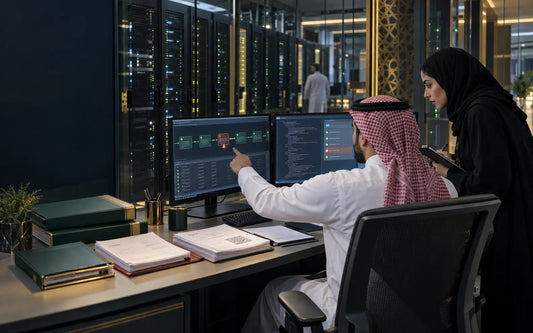
Financial institutions in Saudi Arabia face growing pressure to prove that their anti-money laundering programs are effective, operational, and aligned with regulatory expectations.
A SAMA AML inspection is no longer a routine review of policies and procedures. Regulators now expect institutions to demonstrate real-world control effectiveness across governance, customer due diligence, transaction monitoring, sanctions screening, and suspicious transaction reporting.
For banks, fintech firms, insurance companies, exchange houses, and financing institutions, inspection readiness has become a critical compliance priority. Regulatory findings can lead to penalties, remediation orders, operational restrictions, and reputational damage that affects customer confidence and correspondent banking relationships.
As explained in our Complete SAMA AML Compliance Guide for Saudi Financial Institutions, institutions that maintain ongoing inspection readiness are far more likely to perform well during regulatory reviews. Compliance officers should treat inspection preparation as a continuous process rather than a last-minute exercise.
For official regulatory context, institutions should also review the Saudi Central Bank’s AML/CTF Guide, which outlines key expectations for anti-money laundering and counter-terrorist financing controls.
This article explains what SAMA inspectors typically examine and provides a practical pre-inspection checklist for compliance teams.
Why SAMA AML Inspections Are Becoming More Intensive
Saudi Arabia continues strengthening its AML framework in line with Financial Action Task Force standards and international financial crime expectations.
With the rapid growth of digital banking, fintech innovation, and cross-border transactions, regulators are placing greater focus on operational AML effectiveness.

Institutions that rely only on documented policies without operational evidence often struggle during inspections.
The issue is not usually whether the institution has AML documents.
The issue is whether those documents reflect what actually happens inside the organization.
That difference matters deeply during a regulatory review.
The Main Focus Areas of a SAMA AML Inspection
SAMA inspectors generally focus on governance, risk management, and operational effectiveness.
They want to understand whether AML controls are properly designed, implemented, tested, and improved over time.
Governance and Accountability
Regulators want clear evidence that AML responsibilities are properly assigned and supported by senior leadership.
They examine whether boards and compliance committees actively oversee financial crime risks and whether AML officers operate independently with adequate resources.
Inspectors also review:
-
Escalation procedures
-
Internal reporting structures
-
Audit involvement
-
Remediation tracking
-
Board-level AML reporting
-
Compliance committee minutes
-
Evidence of senior management oversight
Weak governance often signals broader compliance weaknesses across the institution.
A strong governance framework shows that AML is not treated as a narrow compliance task.
It shows that AML risk is understood as an institutional risk.
Risk-Based AML Framework
SAMA expects financial institutions to apply a genuine risk-based approach rather than using identical controls for every customer, product, or channel.
Inspectors evaluate whether the institution properly identifies:
-
High-risk customers
-
Politically Exposed Persons, or PEPs
-
Cross-border activities
-
Cash-intensive businesses
-
Digital onboarding risks
-
Complex ownership structures
-
High-risk jurisdictions
-
Sanctions exposure
The institution must demonstrate how these risks influence customer due diligence, transaction monitoring intensity, and escalation procedures.
A risk-based framework is not only a scoring model.
It must shape real operational decisions.
Operational Effectiveness
Operational effectiveness is one of the most heavily scrutinized areas during inspections.
Regulators test whether AML controls function effectively in practice, including:
-
Transaction monitoring
-
Sanctions screening
-
Suspicious transaction reporting
-
Employee awareness
-
Record retention procedures
-
Customer file quality
-
Case investigation standards
Even strong written policies lose credibility if operational execution is weak.
This is why inspection readiness must be tested continuously, not only when an inspection is announced.
Pre-Inspection Checklist for Compliance Officers

Preparing for a SAMA AML inspection requires organized planning well before examiners arrive.
Compliance teams should regularly assess documentation quality, operational controls, employee readiness, and evidence of control effectiveness.
The following checklist helps compliance officers prepare more confidently.
1. Review AML Governance Documentation
The first step is ensuring that governance documentation is complete, current, and consistent with actual operations.
Inspectors typically request:
-
AML/CFT policy manuals
-
Enterprise-wide risk assessments
-
Board-approved AML frameworks
-
Compliance committee meeting records
-
Organizational charts
-
Escalation procedures
-
Internal audit reports
-
Remediation tracking logs
-
AML reporting packs submitted to senior management
Institutions should confirm that policies reflect current regulatory requirements and internal processes.
Outdated or template-based documentation is a common weakness identified during inspections.
Regulators also expect evidence that senior management receives regular AML reporting and actively participates in oversight activities.
A policy may look strong on paper, but if there is no evidence of board review, management challenge, or remediation follow-up, inspectors may question whether governance is truly active.
2. Assess Customer Due Diligence Controls
Customer Due Diligence failures remain one of the most common regulatory findings.
SAMA inspectors often review customer files to determine whether institutions properly identified risks and collected required onboarding documentation.
Compliance officers should verify that customer records include the following:

Special attention is usually given to higher-risk customer categories such as:
-
Politically Exposed Persons
-
Non-resident customers
-
Cash-intensive businesses
-
Cross-border corporate entities
-
Customers with complex ownership structures
-
Customers from higher-risk jurisdictions
Institutions should also confirm that customer risk ratings align with actual transactional behavior.
A low-risk customer engaging in frequent international transfers may raise regulatory concerns if the file does not explain why the activity is reasonable.
Periodic customer reviews are equally important.
Missing or overdue reviews can create the impression that ongoing monitoring controls are ineffective.
For official guidance on due diligence expectations, institutions should review SAMA’s due diligence measures, including requirements around identifying and verifying customers and beneficial owners.
3. Validate Transaction Monitoring Systems
Transaction monitoring is a major inspection focus because it demonstrates whether the institution can identify suspicious activity effectively.
Inspectors increasingly expect institutions to explain how monitoring thresholds are calibrated and why certain scenarios were implemented.
Areas commonly reviewed include:
-
Alert generation logic
-
Threshold calibration
-
False positive management
-
Investigation timelines
-
Escalation procedures
-
Quality assurance testing
-
Scenario coverage
-
Customer segmentation logic
-
Model change approvals
Before an inspection, compliance teams should conduct internal testing on monitoring alerts to evaluate investigation quality and escalation consistency.
Weak investigative documentation is a recurring problem during inspections.
Investigators should clearly explain:
-
Why activity appeared unusual or suspicious
-
What analysis was performed
-
What customer context was reviewed
-
Why the case was escalated or closed
-
Whether the customer profile supported the activity
-
Whether further monitoring was required
SAMA’s monitoring of transactions and activities guidance highlights the importance of monitoring unusual and suspicious transactions as part of a risk-based approach.
A monitoring system should therefore be tested not only for technical functionality, but also for investigative usefulness.
4. Review Suspicious Transaction Reporting Procedures

SAMA inspectors closely examine suspicious transaction reporting because it reflects the institution’s ability to identify and escalate financial crime risks.
Compliance teams should ensure that internal escalation procedures are fully operational and understood across departments.
Inspectors often assess:
-
Internal reporting channels
-
Escalation timelines
-
Case management procedures
-
Documentation standards
-
Regulatory filing records
-
Compliance officer review processes
-
Decision rationale for filed and non-filed cases
A common issue is delayed escalation by operational staff who fail to recognize suspicious activity indicators or misunderstand reporting obligations.
Employee interviews are frequently used during inspections to assess awareness levels and escalation knowledge.
SAMA’s Section 8 on Reporting of Suspicious Transactions requires financial institutions to establish and effectively implement internal procedures for reporting unusual transactions or activities.
The SAFIU portal also provides official context on Saudi Arabia’s financial intelligence framework.
Compliance officers should verify that staff understand the difference between unusual activity and reasonable suspicion.
They should also ensure that STR decisions are documented clearly enough to be defended later.
5. Evaluate Sanctions Screening Controls
Sanctions compliance is another critical inspection area, especially for institutions involved in international transactions, trade finance, or correspondent banking.
SAMA inspectors review whether screening systems function effectively in real time and whether institutions properly manage screening risks.
Compliance officers should confirm that customer and transaction screening systems are:
-
Updated regularly
-
Supported by proper audit trails
-
Calibrated for name-matching accuracy
-
Tested periodically
-
Reviewed independently
-
Integrated into onboarding and transaction workflows
-
Supported by clear escalation procedures
Regulators also evaluate how institutions handle false positives.
Excessive alert volumes may reduce monitoring effectiveness, while weak matching settings may allow prohibited entities to bypass controls.
Institutions should maintain evidence of:
-
Regular sanctions system testing
-
Independent reviews
-
Watchlist updates
-
Escalation decisions
-
False positive analysis
-
System change approvals
Sanctions screening is not only a technical control.
It is also a governance and data quality issue.
If customer records are incomplete or inconsistent, screening accuracy will suffer.
Data Quality Is a Growing Regulatory Concern

Many AML failures stem from poor data quality rather than weak policies.
Incomplete or inconsistent customer information can undermine transaction monitoring and sanctions screening systems.
Inspectors increasingly review whether customer records remain accurate across multiple systems.
Common issues include:
-
Duplicate customer profiles
-
Inconsistent identifiers
-
Outdated risk ratings
-
Incomplete beneficial ownership data
-
Missing source of funds information
-
Unclear customer relationship purpose
-
Poor transaction data mapping
-
Unreliable audit trails
Compliance officers should work closely with IT and operations teams to identify and correct these weaknesses before inspections occur.
Data quality should be treated as a core AML control, not only an operational support issue.
A bank may have advanced monitoring technology, but if the underlying data is weak, the system cannot produce reliable results.
Strengthen AML Training Programs
SAMA expects institutions to maintain role-based AML training programs tailored to operational risks.
Generic annual training sessions are often insufficient for high-risk business areas.
Departments such as trade finance, correspondent banking, transaction monitoring, customer onboarding, and private banking usually require enhanced AML education.
Inspectors may review:
-
Training attendance records
-
Employee assessments
-
Refresher schedules
-
Specialized learning materials
-
Role-based training plans
-
Evidence of training completion
-
Training effectiveness reviews
Training effectiveness is also evaluated through employee interviews.
Staff members who cannot explain escalation procedures or recognize suspicious activity indicators may create concerns about the institution’s compliance culture.
Strong AML training should help employees understand:
-
Their role in AML compliance
-
How to identify red flags
-
When to escalate concerns
-
What documentation is required
-
How customer risk affects daily decisions
-
Why delayed reporting creates regulatory risk
Training should not be treated as an annual formality.
It should be a practical control that improves real decision-making.
Conduct Internal AML Audits Before the Inspection
One of the most effective ways to prepare for a SAMA AML inspection is by conducting internal reviews that simulate regulatory testing.
Internal audits help compliance teams identify weaknesses before regulators do.
These reviews should assess whether AML controls work consistently across departments and whether documentation supports operational decisions.
 Institutions should test:
-
Customer onboarding files
-
Transaction monitoring investigations
-
STR escalation procedures
-
Sanctions screening accuracy
-
Record retention controls
-
Customer risk rating logic
-
High-risk customer reviews
-
Employee understanding of AML responsibilities
Compliance officers should also verify whether previously identified issues were remediated properly.
Regulators often review historical findings to determine whether the institution takes corrective action seriously.
A repeated issue with no documented remediation plan can significantly increase regulatory concern.
Internal audits should not only identify weaknesses.
They should also confirm that management actions are tracked, completed, and independently validated.
Prepare Employees for Regulatory Interviews
Many institutions focus heavily on documentation while overlooking employee preparedness.
SAMA inspectors frequently interview employees from compliance, operations, customer onboarding, relationship management, and transaction monitoring teams.
These interviews help regulators assess whether AML controls are truly embedded across the organization.
Employees should understand:
-
How suspicious activity is escalated
-
Their role in AML compliance
-
Customer due diligence requirements
-
Sanctions screening responsibilities
-
Internal reporting obligations
-
Where to find AML policies
-
What red flags apply to their role
-
How to respond when activity seems unusual
Staff members do not need scripted answers.
But they should demonstrate practical understanding of AML procedures relevant to their roles.
Inconsistent employee responses during interviews often indicate weak compliance culture and ineffective training programs.
A strong institution prepares employees by making AML procedures part of normal operations, not by coaching them only before inspection.
Maintain Organized Inspection Documentation

Poor document management can create unnecessary problems during inspections.
Compliance teams should maintain a centralized inspection repository containing policies, testing results, audit reports, committee minutes, customer samples, and regulatory correspondence.
Documents should be:
-
Current and approved
-
Easy to retrieve
-
Consistent across departments
-
Properly version controlled
-
Clearly owned
-
Supported by evidence
-
Aligned with actual procedures
Regulators often view delayed document production as a sign of weak governance or operational disorganization.
A structured inspection response process also reduces pressure on compliance teams during active examinations.
SAMA’s record-keeping guidance is especially important because AML-related records, internal investigations, inspections, and suspicious activity documentation may need to be retained and protected appropriately.
Inspection documentation should not be assembled at the last minute.
It should be maintained continuously as part of the institution’s AML operating model.
Why Many Institutions Fail SAMA AML Inspections
Most AML inspection failures do not happen because institutions completely lack compliance controls.
Failures usually occur because controls are inconsistent, poorly documented, outdated, or not properly implemented.
Common inspection weaknesses include:
-
Outdated AML policies
-
Weak customer risk assessments
-
Poor alert investigation narratives
-
Delayed suspicious transaction reporting
-
Inadequate sanctions screening calibration
-
Incomplete customer records
-
Insufficient employee training
-
Weak board oversight
-
Poor remediation tracking
-
Fragmented data systems
-
Inconsistent customer file reviews
Another major issue is treating inspection readiness as a temporary project instead of an ongoing operational discipline.
Institutions that continuously test, review, and improve AML controls generally perform far better during regulatory inspections.
A successful inspection outcome is rarely created in the weeks before examiners arrive.
It is created through the daily discipline of the compliance program.
The Growing Importance of AML Technology and Data Governance

Technology now plays a central role in SAMA AML inspections.
Regulators increasingly examine whether financial institutions maintain reliable systems for transaction monitoring, sanctions screening, customer risk scoring, and data management.
Compliance officers should be prepared to explain:
-
How AML systems are calibrated
-
How alerts are prioritized
-
How customer data flows between systems
-
How model validation is performed
-
How system changes are approved and documented
-
How data quality issues are identified and resolved
-
How technology supports STR decision-making
Data governance has become especially important because poor-quality data can undermine even advanced AML systems.
Institutions with fragmented systems, inconsistent customer records, or incomplete beneficial ownership information often face heightened regulatory scrutiny.
Technology should support compliance judgment.
It should not replace it.
The strongest AML programs combine reliable systems with trained professionals who can interpret risk correctly.
AML Specialist Course: Why Compliance Teams Need Advanced Inspection Training
Many compliance professionals understand AML regulations in theory but struggle during real regulatory inspections because they lack practical inspection readiness experience.
That gap becomes dangerous when regulators begin asking detailed questions about:
-
Transaction monitoring calibration
-
Sanctions controls
-
STR decision-making
-
Enterprise-wide risk assessments
-
Customer file quality
-
Investigation documentation
-
Remediation evidence
-
Governance reporting
The reality is simple:
Institutions are no longer judged only on written policies.
They are judged on whether compliance officers can defend operational decisions under regulatory scrutiny.
Anti-Money Laundering and Counter-Terrorist Financing
Strengthen your understanding of anti-money laundering and counter-terrorist financing requirements, including risk assessment, customer due diligence, transaction monitoring, and the handling of suspicious activity within the Saudi compliance environment.
Strengthen Your Financial Crime Compliance Readiness
Explore the course content and develop the essential knowledge needed to support effective institutional compliance.
View Course DetailsThe AML Specialist Course is designed for professionals who want more than basic AML knowledge. It focuses on practical risk management, inspection readiness, suspicious transaction investigations, sanctions compliance, customer due diligence, and real-world AML control implementation.
For compliance officers working in banks, fintech firms, exchange houses, or insurance institutions, advanced AML expertise is increasingly becoming a career requirement rather than only an advantage.
Organizations with undertrained compliance teams face greater risks during inspections, remediation exercises, and enforcement actions.
Building a Long-Term Inspection Readiness Framework
The most effective institutions do not prepare for inspections only when regulators announce a review.
Instead, they build continuous readiness frameworks that operate throughout the year.
A sustainable AML inspection readiness program usually includes:
-
Periodic internal AML testing
-
Ongoing policy updates
-
Regular customer file reviews
-
Transaction monitoring optimization
-
Employee refresher training
-
Independent audit assessments
-
Board reporting and oversight
-
Remediation tracking
-
Data quality reviews
-
Scenario and threshold calibration
-
STR quality assurance reviews
This proactive approach helps institutions identify weaknesses early and maintain stronger regulatory confidence.
Inspection readiness should become part of the institution’s overall risk culture rather than a standalone compliance exercise.
A strong readiness framework does not ask:
“Are we ready for inspection?”
It asks:
“Can we prove our AML controls are working today?”
That is the mindset regulators increasingly expect.
Final Thoughts
SAMA AML inspections are becoming more detailed, data-driven, and operationally focused.
Regulators expect financial institutions to demonstrate not only policy compliance but also real-world effectiveness across governance, customer due diligence, transaction monitoring, sanctions screening, and suspicious transaction reporting.
Compliance officers who maintain strong documentation, well-trained staff, reliable monitoring systems, and ongoing internal testing place their institutions in a far stronger position during inspections.
For a full breakdown of regulatory expectations, frameworks, and implementation strategies, read our Complete SAMA AML Compliance Guide for Saudi Financial Institutions and use it as the foundation of your broader compliance program.
Inspection readiness is not a one-time project.
It is a continuous discipline.
And in Saudi Arabia’s evolving financial sector, that discipline may become one of the clearest signs of AML maturity.