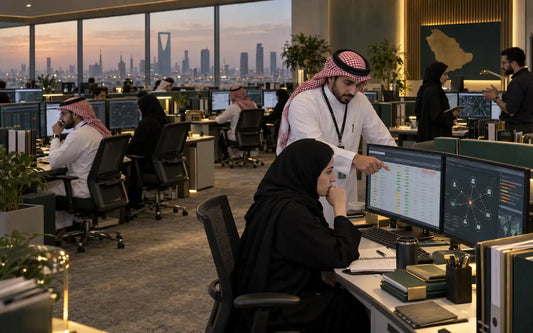
The gap between an entry-level safety officer and a high-paid HSE professional in Saudi Arabia is not only years of site experience. It is proof that the person can prevent incidents, manage risk, support audits, communicate with contractors, and work inside serious project environments.
That is why the safety officer salary in Saudi Arabia varies so widely. Public salary platforms show different averages, but they point to the same pattern: ordinary safety officer roles often sit around mid-level monthly pay, while stronger HSE profiles can move higher based on industry, location, experience, and credentials. GulfTalent places average safety officer pay in Saudi Arabia around SAR 5,000 per month, with higher ranges depending on industry and candidate profile, while Naukrigulf reports an average around SAR 5,290 per month from salary submissions. PayScale’s 2026 data shows wider annual variation, with total pay changing significantly across experience levels and locations.
The difference is not random.
Saudi employers are not only hiring someone to wear a safety vest and complete daily checklists. In construction, oil and gas, petrochemicals, manufacturing, logistics, facilities, and giga-project environments, employers want safety officers who can reduce operational risk. The higher-paying roles usually go to professionals who combine recognized HSE training, site discipline, reporting ability, incident awareness, and sector-specific experience.
For safety professionals in KSA, the salary question is not simply, “How much does a safety officer earn?” The better question is, “What makes an employer willing to pay more?”
Why Certified Safety Officers Earn More In Saudi Arabia
Safety officer jobs Saudi Arabia employers advertise often ask for more than basic site experience. Many roles prefer or require safety-related credentials because certificates help employers filter candidates who understand risk assessment, control measures, incident prevention, workplace inspections, and legal responsibilities.
This does not mean a certificate alone guarantees a high salary. It means certification can help a candidate move from “available safety officer” to “credible HSE professional.”
Saudi Arabia has a serious occupational safety environment. HRSD explains that Saudi Labor Law includes provisions related to worker safety, protection, health, and social care, and its workplace health and safety page places safety inside the wider employment environment. That makes HSE roles more than support functions. They are part of employer responsibility and project continuity.
Higher-paid safety officers usually show three things clearly: they understand HSE systems, they can apply safety rules on site, and they can prove their judgment through documentation.
A junior safety officer may identify hazards and report unsafe behavior. A stronger HSE professional can investigate incidents, prepare risk assessments, support permit-to-work systems, train workers, close audit findings, coordinate with contractors, and explain risk to management. That wider capability is what raises earning power.
In a competitive market, employers notice candidates who can reduce problems before they become stoppages, injuries, legal exposure, or client complaints.
NEBOSH, OSHA, And IOSH: The Credentials Saudi Employers Notice
 In Saudi Arabia, the most visible HSE credentials in job postings are usually NEBOSH, OSHA, and IOSH. Employers may also ask for a diploma or degree in occupational health and safety, engineering, environmental health, or a related field.
NEBOSH Saudi Arabia demand is especially visible in HSE job listings. Some current Saudi HSE postings describe NEBOSH as mandatory, with OSHA or IOSH treated as an added advantage. One Indeed Saudi Arabia listing for an HSE officer role, for instance, asks for a bachelor’s degree or diploma in occupational health and safety or engineering, with NEBOSH mandatory and OSHA or IOSH listed as an advantage.
That tells candidates something important. Employers are not only looking for names on a CV. They are looking for signals that the candidate can work inside structured safety systems.
NEBOSH is often valued because it is associated with international health and safety knowledge. OSHA-related training is commonly recognized by employers for workplace safety awareness and hazard control. IOSH is often seen as useful for safety management awareness, especially for supervisors and professionals who need to support safer working practices.
The key is alignment. A candidate applying for a construction HSE role should not only list a certificate; the CV should show construction hazards, site inspections, toolbox talks, contractor coordination, and incident reporting. A candidate targeting petrochemical or oil and gas roles should show exposure to permit-to-work systems, process safety awareness, confined space controls, emergency response, and high-risk operations.
A credential opens the conversation. Evidence of applying it helps move the salary.
Oil, Gas, And Petrochemical Projects Pay The Highest HSE Salaries
HSE salary Saudi Arabia levels often rise in industries where risk is higher and project requirements are stricter. Oil, gas, petrochemical, energy, and industrial construction roles tend to pay more because the consequences of failure are greater.
A safety officer on a small commercial site may focus on daily inspections, PPE, housekeeping, and basic incident reporting. A safety officer in an oil and gas or petrochemical environment may need to understand high-risk permits, hazardous energy, confined spaces, lifting operations, gas testing, emergency procedures, process hazards, and contractor safety management.
That added complexity affects salary expectations.
Job-market data supports this difference. Bayt listings for HSE Manager roles in Saudi Arabia include mid-career positions in Riyadh with salary ranges such as SAR 11,250 to SAR 15,000, while GulfTalent reports that health and safety manager salaries in Saudi Arabia can go significantly higher depending on industry, location, and candidate profile.
This is why the highest earners are rarely only “site experienced.” They are experienced in the right kind of site.
Oil and gas, petrochemical, and large industrial projects reward safety professionals who can work under pressure, manage multiple contractors, maintain documentation, communicate with engineers and supervisors, and respond quickly when conditions change.
For HSE professionals trying to grow salary, the sector matters. Moving from basic safety supervision into industrial, energy, infrastructure, or high-risk project environments can change the career path. But that move usually requires stronger training, better documentation skills, and a CV that proves real exposure to risk controls.
Vision 2030 Mega-Projects Are Raising Demand For HSE Talent
 Saudi Arabia’s project pipeline has changed the HSE career market. Large developments need strong safety teams because construction, infrastructure, logistics, tourism, transport, utilities, and urban projects all create safety risk at scale.
Vision 2030 is not only creating new buildings and destinations. It is expanding the need for professionals who can help projects operate safely, reduce incidents, and meet contractor and client expectations. The official Vision 2030 platform describes major transformation across sectors including tourism, logistics, housing, industry, and quality-of-life programs, all of which create wider demand for skilled operational professionals.
For safety officers, this creates opportunity, but not automatic promotion.
Mega-projects can attract thousands of applicants. Employers can be selective. They may look for candidates who already understand site safety, risk assessments, method statements, toolbox talks, lifting plans, emergency drills, inspections, audits, and subcontractor behavior.
This is where HSE certification Saudi Arabia search intent becomes important. Candidates are not only looking for a certificate to add to their profile. They are trying to compete for stronger roles in a market where employers want readiness.
High-demand locations can also change the salary picture. Riyadh may offer more roles linked to corporate, construction, infrastructure, and facilities growth. Dammam and Jubail are stronger for industrial, oil and gas, petrochemical, and energy-linked work. NEOM and other large project locations can offer project-specific opportunities, but they may also require candidates who can handle remote-site pressure, contractor coordination, and demanding site schedules.
Experience Level Still Decides How Far Your HSE Salary Can Grow
Certification helps candidates get noticed, but experience decides how far the salary can grow.
A new safety officer may understand basic safety concepts but still need supervision. A mid-level HSE officer can manage inspections, prepare reports, support training, and identify repeated hazards. A senior HSE professional can influence supervisors, lead investigations, audit contractors, review risk controls, and prevent recurring incidents.
Employers pay more when they trust the person to handle judgment, not only tasks.
|
Career Stage |
Typical Employer Expectation |
Salary Growth Driver |
|
Entry-level safety officer |
Site observations, PPE checks, basic reporting, toolbox support |
Foundational HSE training and discipline |
|
Mid-level HSE officer |
Inspections, incident reports, risk assessments, worker briefings |
Sector experience and stronger documentation |
|
Senior safety officer or HSE supervisor |
Contractor control, audits, investigations, permit support, team coordination |
Leadership, high-risk site exposure, and problem-solving |
|
HSE manager |
HSE planning, compliance systems, reporting to leadership, project-wide controls |
Management ability and strategic safety oversight |
This is why safety officer salary by experience is one of the most important salary factors. Two candidates may both have NEBOSH, but the one who has led incident investigations, closed audit findings, handled contractor safety, and worked on high-risk sites will usually have stronger negotiating power.
Experience becomes valuable when it proves reduced risk.
A candidate should not describe experience only by years. “Five years of experience” is weaker than showing the type of project, hazards managed, number of workers covered, inspection frequency, training delivered, incidents investigated, and systems used. Employers need to see the level of responsibility behind the years.
Riyadh, Dammam, Jubail, And NEOM Offer Different HSE Salary Paths
 Location affects HSE career Saudi Arabia opportunities because each market has a different project profile.
Riyadh has strong demand across construction, commercial developments, infrastructure, government-linked projects, facilities, events, and corporate HSE roles. It can be attractive for safety officers who want career mobility and access to large employers. Dammam and Jubail are different. They are closely connected to industrial, energy, petrochemical, logistics, and port-related activity, where technical HSE exposure may be more valuable.
NEOM and other remote or large project areas can offer a different kind of path. These roles may require adaptability, long shifts, multi-contractor environments, and comfort working away from major city routines. Compensation may include allowances, accommodation, transportation, medical coverage, or rotation benefits, which makes total compensation more important than basic salary alone.
This is where many candidates misread salary offers. A role with a lower basic salary but strong accommodation, transport, overtime policy, insurance, rotation structure, and project allowance may be more valuable than a higher basic salary with weak benefits.
High-paid safety officers do not look only at the monthly number. They evaluate the full package, the project exposure, and the next career step.
High-Paid Safety Officers Bring More Than Site Experience
The safety officers earning stronger salaries in KSA usually bring more than years on site. They bring judgment.
That judgment shows in how they respond when work pressure rises. A weaker safety officer may only report a hazard after seeing it. A stronger HSE professional can explain why the hazard exists, what control is missing, who owns the correction, and how the same risk can be prevented from returning.
Employers pay more for that level of thinking because it protects time, people, equipment, project reputation, and client confidence.
High-paid safety officers are often strong in several areas at once. They understand site inspections, but they also know how to write useful reports. They can deliver toolbox talks, but they can also challenge unsafe work without creating conflict. They understand PPE, but they also understand permits, method statements, contractor behavior, emergency response, and incident investigation.
This is what separates a routine safety role from a serious HSE career.
Saudi employers also value communication. A safety officer who can speak clearly with workers, supervisors, engineers, subcontractors, and managers becomes more useful on complex sites. Technical knowledge matters, but the ability to influence behavior is what turns knowledge into safer work.
Why Total Compensation Matters More Than Basic HSE Salary
Many candidates focus only on basic salary. That can lead to poor career decisions.
In Saudi Arabia, HSE jobs can include different combinations of housing, transportation, food allowance, medical coverage, overtime, rotation, remote-site allowance, annual ticket, and project benefits. A role with a slightly lower basic salary may offer a stronger total package than a role with a higher basic figure and weaker benefits.
This matters especially in remote project locations, industrial cities, and high-pressure site environments. A safety officer working in Jubail, Dammam, NEOM, or an oil and gas project may have a different cost structure from someone working in a city-based role in Riyadh.
Candidates should compare the full offer, not only the monthly headline.
The better question is not, “What is the basic salary?” It is, “What is the total value of the role, and what experience will it add to my next move?”
A project with stronger exposure, better training, recognized systems, and serious safety standards can be more valuable long term than a slightly higher salary in a weaker environment. High-paid HSE professionals usually build careers through roles that improve their future market value, not only their current payslip.
How HSE Training Helps Safety Officers Compete For Better Roles
 HSE training helps safety officers compete because it turns site experience into structured capability.
Many professionals have worked around hazards for years, but they struggle to explain risk in a professional way. They know a situation is unsafe, but they cannot always connect it to risk assessment, control hierarchy, incident prevention, audit findings, or management reporting. That gap can limit salary growth.
The HSE course supports safety professionals who want to strengthen that foundation. It helps learners understand how health, safety, and environmental responsibilities connect to daily site work, risk control, workplace inspections, documentation, and safer decision-making.
For job seekers, training can improve how they present themselves. Instead of saying they “worked on site,” they can show that they understand hazard identification, risk control, incident reporting, safety communication, and compliance expectations. That gives employers more confidence.
For working safety officers, training can also improve performance in the current role. Better reports, clearer observations, stronger toolbox talks, and more disciplined follow-up can make a safety officer more visible to supervisors and project managers.
The strongest HSE careers are built through a combination of site experience, recognized training, communication skills, and evidence of real responsibility.
Conclusion
Safety officer salary in Saudi Arabia rises when employers trust a professional with more responsibility.
Certification helps. Industry experience helps. Oil, gas, petrochemical, industrial, construction, and mega-project exposure can raise earning potential. Location also matters, especially across Riyadh, Dammam, Jubail, NEOM, and other project-heavy areas.
But the real difference is confidence.
Employers pay more for safety officers who can prevent problems, document risks, communicate clearly, support compliance, and work inside demanding project environments. They want people who understand that HSE is not only about checking boxes. It is about protecting workers, keeping operations stable, and helping projects move without avoidable safety failures.
For safety professionals who want better roles, the next step is clear: build stronger skills, document real achievements, choose experience carefully, and use HSE training to turn site knowledge into career growth.
The HSE course can help safety officers strengthen that foundation and compete more effectively for higher-value roles in Saudi Arabia’s growing safety market.