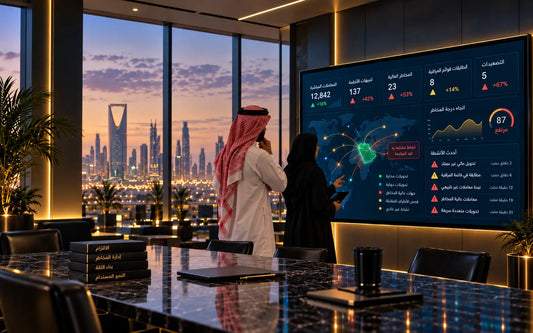
In Saudi Arabia’s recent job market, the people getting noticed are not always the loudest in the meeting — they are the ones who can move work from “planned” to “delivered.”
That is why Project Management Skills KSA has become a serious career keyword for ambitious Saudis and expats. The Kingdom is no longer only talking about transformation. It is building, launching, measuring, correcting, and scaling. Vision 2030 projects, private sector expansion, giga-projects, tourism, construction, logistics, tech, entertainment, and government transformation all need one thing: people who can deliver results at speed.
This is the new career reality. Ideas matter. Strategy matters. But in Saudi Arabia’s execution era, delivery speed is a career multiplier.
The official Vision 2030 projects portfolio shows the scale of national transformation, from Qiddiya and ROSHN to Riyadh Art and Sports Boulevard. At the same time, the Human Capability Development Program focuses on preparing Saudi talent with the capabilities needed for future competition. Together, they show a clear message: the market needs professionals who can turn ambition into measurable progress.
The Execution Era: Why the Saudi Job Market in 2026 Rewards Finishers Over Thinkers
 Project Management Skills KSA now sits at the centre of career growth because the Saudi market has shifted from planning energy to execution pressure. For years, many organisations focused on strategy decks, transformation roadmaps, feasibility studies, and future operating models. Those are still important. But by 2026, the question has changed.
It is no longer only: What is the plan?
It is now: Who can deliver it, and how fast?
This matters for professionals across sectors. A construction manager in Riyadh needs to coordinate contractors, approvals, procurement, risk, and reporting. A tech lead in NEOM or Qiddiya-related work may need to manage sprint velocity, stakeholder expectations, and cross-functional dependencies. A government transformation officer may need to move policy, digital platforms, and service improvements through complex approval cycles.
In this environment, “thinking” without delivery becomes expensive. Meetings without outcomes slow the business. Long email threads without decisions create risk. Teams that cannot prioritise lose momentum.
Quick Fact Box: What “Delivery Speed” Really Means
|
Delivery Speed Is Not |
Delivery Speed Is |
|
Rushing without quality |
Moving with focus and control |
|
Working longer hours |
Using time and resources better |
|
Saying yes to everything |
Prioritising the highest-impact work |
|
Skipping governance |
Reducing delays through clarity |
|
Being busy all day |
Delivering visible progress |
The latest Vision 2030 reporting also reflects this execution mindset. The 2025 Annual Report, released in April 2026, frames the programme around progress across a vibrant society, thriving economy, and ambitious nation, showing that Saudi transformation is now measured through delivery and outcomes, not only aspiration. (Saudi Vision 2030)
This is why “finishers” are becoming more valuable. A finisher does not only understand the target. A finisher removes blockers, manages time, protects priorities, and keeps stakeholders aligned until the result is complete.
The Leadership Bandwidth Gap: The #1 Constraint in the Kingdom Today
 Project Management Skills KSA is also becoming important because Saudi organisations are facing a leadership bandwidth gap. This does not mean there are no talented leaders. There are many. The real issue is that the scale of work is growing faster than many teams’ ability to manage it.
Think about a manager who has 12 strategic initiatives, 40 direct and indirect stakeholders, weekly executive reporting, urgent client requests, hiring needs, compliance requirements, and daily team issues. That manager may be intelligent, experienced, and committed. But without time management for leaders, their bandwidth collapses.
Leadership bandwidth means the ability to:
-
absorb complexity without freezing,
-
prioritise under pressure,
-
make decisions on time,
-
delegate without losing control,
-
protect team focus,
-
and deliver progress across multiple workstreams.
In Saudi Arabia’s high-growth environment, this skill is no longer optional. It affects promotions, hiring, performance reviews, and leadership trust.
A manager who cannot manage time becomes a bottleneck. A manager who can manage time becomes a multiplier.
The NEOM careers portal, the Diriyah Company careers page, and Qiddiya careers all show how major Saudi developments continue to attract professionals into complex, multi-disciplinary environments. These are not simple jobs. They require coordination, delivery discipline, and strong ownership.
Leadership Bandwidth KSA: What Employers Notice
|
Weak Bandwidth |
Strong Bandwidth |
|
Always reactive |
Plans the week around outcomes |
|
Delays decisions |
Escalates clearly and early |
|
Holds too many tasks personally |
Delegates with accountability |
|
Measures activity |
Measures impact delivered |
|
Feels busy but unclear |
Creates visible progress |
For ambitious professionals, this is good news. You do not need to wait 10 years to show leadership maturity. You can demonstrate it by becoming the person who manages workload better than others.
Managing Up in a Giga-Project: Handling the Scale of 2026’s Biggest Developments
Project Management Skills KSA becomes especially powerful when professionals work in or around giga-projects. Whether the target is NEOM project jobs 2026, Qiddiya, Diriyah, real estate development, infrastructure, tourism, entertainment, or digital transformation, the work environment is usually intense.
Big projects create big visibility. But they also create big ambiguity.
You may have multiple leaders asking for updates. A deadline may depend on procurement, legal, engineering, finance, vendors, and government approvals. A small delay in one workstream can affect another. In these settings, your ability to “manage up” can define your career reputation.
Managing up does not mean flattering senior leaders. It means giving them what they need to make decisions quickly.
That includes:
-
concise updates,
-
early risk warnings,
-
realistic timelines,
-
clear options,
-
and no surprise delays.
A strong project professional does not wait until the deadline fails. They show the risk while there is still time to act.
For example, instead of saying:
“We are still working on the vendor approval.”
A delivery-focused manager says:
“Vendor approval is at risk because legal review is pending. If approved by Thursday, we stay on track. If delayed, launch moves by five working days. My recommendation is to escalate today.”
That is the difference between reporting activity and managing delivery.
This is why professionals targeting “how to get a job in NEOM or Qiddiya 2026” should not only polish their CV. They should build evidence that they can coordinate complex work, handle deadlines, and communicate with senior stakeholders. Official project career portals are useful starting points, but your real advantage is proving you can operate in high-pressure delivery environments. (NEOM Jobs)
This is also where the Time Management Productivity course fits naturally. It helps professionals improve prioritisation, structure their workload, and manage time as a leadership tool — not just as a personal habit.
The Result-First Mindset: Moving From “Hours Worked” to “Impact Delivered”
Project Management Skills KSA is not about looking busy. It is about creating value that others can see, use, measure, and trust.
In many workplaces, employees still fall into the “hours worked” trap. They believe long hours prove commitment. Sometimes they do. But in Saudi private sector efficiency, long hours without delivery can signal poor prioritisation, unclear ownership, or weak planning.
The result-first mindset asks better questions:
What changed because of my work?
What moved forward this week?
What decision did I unlock?
What risk did I reduce?
What customer, project, or team outcome improved?
This mindset is powerful because it aligns with how senior leaders think. Executives rarely promote people only because they are busy. They promote people who reduce pressure, bring order, and deliver outcomes.
Hours Worked vs Impact Delivered
|
Old Career Signal |
New Career Signal |
|
“I stayed late.” |
“I removed the blocker.” |
|
“I attended every meeting.” |
“I clarified the decision.” |
|
“I replied to 80 emails.” |
“I closed the approval loop.” |
|
“I am handling everything.” |
“I delegated and delivered.” |
|
“I am very busy.” |
“Here is the measurable progress.” |
This shift matters even more in construction and tech, where delays can become expensive quickly. Improving productivity in Saudi construction and tech is not only about software or tools. It is about disciplined execution: clear scopes, visible owners, realistic schedules, and fast decision-making.
The official Vision 2030 programme structure shows how broad the Kingdom’s transformation agenda is, covering projects, programmes, and national priorities. In that kind of environment, result-first professionals become valuable because they help convert scale into progress. (Saudi Vision 2030)
ROI of Your Time: Why the Highest-Paid PMs in Riyadh Are the Most Organised
 Project Management Skills KSA has a direct link to income potential because time is one of the most visible forms of leadership. The highest-paid project managers in Riyadh are not always the smartest in the room. Often, they are the most organised.
-
They know what matters this week.
-
They protect decision time.
-
They make follow-ups visible.
-
They prepare before meetings.
-
They reduce confusion.
-
They document commitments.
-
They know when to say no.
That creates trust. And trust creates career growth.
When a senior leader knows that you will not lose track of deadlines, forget key details, or hide risks, you become easier to promote. You become the person they want in the room when work is sensitive.
This is the ROI of your time. Every hour you organise well can reduce rework, protect relationships, and increase your value.
Practical Example: The Organised PM Advantage
Imagine two project managers handling similar work.
The first PM is smart but scattered. They respond late, keep task lists in their head, and update leadership only when asked.
The second PM is equally smart but organised. They send a weekly dashboard, flag risks early, confirm decisions, and keep the team aligned.
Who will be trusted with the bigger project?
Almost always, the second.
Not because they know more. Because they create less uncertainty.
For professionals seeking Vision 2030 career growth, this is one of the most practical lessons: your career accelerates when leaders trust your delivery rhythm.
Practical Checklist: Build Delivery Speed in the Next 30 Days
 Use this checklist to strengthen your delivery bandwidth:
-
Choose three outcomes that matter most this month.
-
Start each week by ranking tasks by business impact.
-
Replace vague updates with decision-focused updates.
-
Block deep work time before meetings take over.
-
Create a visible tracker for deadlines, owners, and risks.
-
Send risk alerts early, not after the deadline is missed.
-
Review your calendar and remove low-value meetings.
-
End each week with a short “delivered / blocked / next” summary.
Small habits create a strong reputation. In a fast-moving Saudi market, that reputation can become your career advantage.
Conclusion: Project Management Skills KSA Are Now Career Acceleration Skills
Project Management Skills KSA are no longer only for people with the title “Project Manager.” They are career acceleration skills for anyone who wants to grow in Saudi Arabia’s execution economy.
The Kingdom’s 2026 market rewards professionals who can manage time, lead delivery, coordinate stakeholders, and turn pressure into progress. Vision 2030 has created a national environment where ambition is visible everywhere. But ambition alone is not enough. Delivery is what gets noticed.
If you want to stand out, do not only ask how to work harder. Ask how to deliver faster, clearer, and with less chaos.
That is the real career multiplier.
For professionals who want to improve this skill set, the Time Management Productivity course is a focused way to build better planning, prioritisation, and execution habits for modern Saudi workplaces.
FAQs
What are the most important Project Management Skills KSA employers want?
Saudi employers increasingly value prioritisation, stakeholder management, time management, risk tracking, communication, delegation, and the ability to deliver measurable outcomes under pressure.
Why is delivery speed important for Vision 2030 career growth?
Vision 2030 has moved many sectors from planning into execution. Professionals who can turn plans into results are more valuable because they help organisations meet deadlines, reduce delays, and show measurable progress.
How can I improve my chances of getting NEOM or Qiddiya project jobs in 2026?
Start by building evidence of delivery. Show projects completed, stakeholders managed, deadlines met, risks controlled, and measurable results. Also use official career portals such as NEOM and Qiddiya to verify roles and avoid fake job postings. (NEOM Jobs)
Is time management important for leaders in Saudi Arabia?
Yes. Time management for leaders is critical because managers often handle multiple projects, stakeholders, and deadlines. Poor time management creates bottlenecks, while strong time management increases team performance.
What is leadership bandwidth in KSA workplaces?
Leadership bandwidth means a leader’s ability to manage complexity, make decisions, delegate, communicate, and keep projects moving without becoming overwhelmed.
Are project management skills useful outside construction?
Yes. Project management skills are useful in tech, healthcare, finance, HR, compliance, tourism, government transformation, logistics, entertainment, and almost every growing Saudi sector.