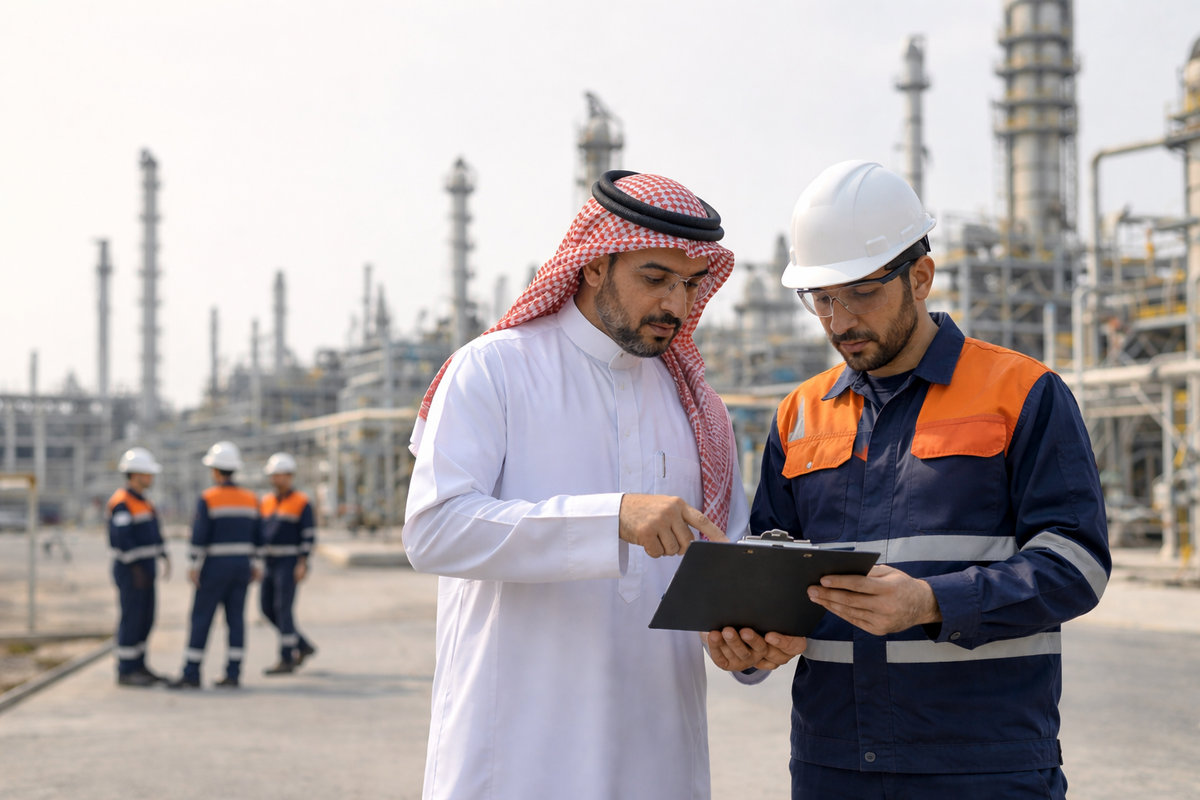
Industrial sites power modern economies. Oil refineries, construction megaprojects, logistics hubs, and manufacturing plants keep essential sectors moving.
But these environments also contain serious hazards.
A single mistake around heavy equipment, electrical systems, or confined spaces can lead to severe injuries or operational shutdowns. That is why high-risk work safety is one of the most important priorities in industrial operations.
Across Saudi Arabia, industries such as oil & gas, infrastructure, petrochemicals, and energy manage complex operations every day. Strong safety systems help organisations protect workers while maintaining productivity.
This guide explains how organisations can improve high-risk work safety, reduce workplace accidents, and build safer industrial environments.
Understanding High-Risk Work Environments

The first step in improving high-risk work safety is identifying which tasks carry the greatest danger.
Certain activities expose workers to elevated risks due to equipment, materials, or working conditions.
Common high-risk environments include:
-
Construction sites
-
Oil and gas facilities
-
Manufacturing plants
-
Chemical processing facilities
-
Power generation plants
Within these settings, several tasks require strict safety controls.
Common High-Risk Tasks
-
Confined space entry
-
Welding or cutting (hot work)
-
Electrical maintenance
-
Working at height
-
Excavation and trenching
-
Heavy lifting with cranes
These activities require strict supervision and planning because standard workplace procedures alone are often not enough to control the risks involved.
Quick Safety Snapshot
|
High-Risk Activity |
Example Hazard |
Possible Consequence |
|
Confined space work |
Oxygen deficiency |
Suffocation |
|
Hot work |
Sparks near flammable materials |
Fire or explosion |
|
Electrical maintenance |
Live circuits |
Electric shock |
|
Working at height |
Unstable platforms |
Falls |
Recognising these hazards early helps organisations develop preventive safety systems rather than reacting after incidents occur.
Risk Assessment and Hazard Identification
Risk assessment sits at the heart of high-risk work safety.
Before any hazardous task begins, teams should evaluate potential risks and determine how to control them.
Risk assessments typically focus on three key questions:
-
What hazards are present?
-
Who could be harmed?
-
What controls can reduce the risk?
The British Safety Council explains that structured risk assessments help organisations identify hazards systematically and apply preventative measures before work begins.
Basic Steps of Risk Assessment
-
Identify hazards in the workplace
-
Evaluate the level of risk
-
Introduce safety control measures
-
Review safety procedures regularly
Typical safety controls include:
-
Lockout/tagout procedures
-
Personal protective equipment (PPE)
-
Isolation of energy sources
-
Safe work procedures
When organisations implement proper assessments, they move from reactive safety to proactive risk management.
The Importance of Risk Management in Workplace Safety

Industrial environments contain dynamic risks. Equipment moves, teams change shifts, and conditions evolve quickly.
That is why high-risk work safety depends on continuous risk management, not one-time assessments.
Why Risk Management Matters
1. Prevents workplace accidents
Structured safety procedures reduce injuries and fatalities.
2. Protects operations
Accidents cause costly delays and shutdowns.
3. Supports regulatory compliance
Many industries must follow strict safety standards.
4. Improves workforce confidence
Workers perform better in safe environments.
Reactive vs Proactive Safety
|
Safety Approach |
Characteristics |
Result |
|
Reactive safety |
Responds after accidents |
Higher risk exposure |
|
Proactive safety |
Identifies hazards early |
Fewer incidents |
Organisations that prioritise proactive high-risk work safety create safer and more efficient workplaces.
Training and Education for Safer Operations
Even the best safety procedures fail without proper training.
Workers must understand:
-
the hazards in their tasks
-
the safety controls required
-
the procedures for reporting unsafe conditions
Effective safety training programmes usually include:
-
hazard awareness training
-
equipment safety training
-
emergency response preparation
-
work authorisation procedures
Many industrial sites rely on permit-based work authorisation systems to manage hazardous tasks.
For professionals who want to learn how these systems control dangerous work activities, specialised training such as the Permit to Work (PTW) System course can help workers and supervisors understand how permits improve safety and reduce operational risks.
This course explains how structured work permits help control hazardous tasks and improve site safety.
Communication and Safety Reporting Systems
Clear communication is another critical part of high-risk work safety.
Industrial sites often involve multiple contractors, supervisors, and technical teams. Without effective communication, important safety information can be lost.
Strong safety communication systems usually include:
-
daily toolbox talks
-
incident reporting systems
-
hazard reporting channels
-
regular safety meetings
The Occupational Safety and Health Administration emphasises that reporting hazards and near misses helps organisations identify risks before they escalate into accidents.
Employer Duties and Worker Responsibilities
Strong high-risk work safety programmes rely on shared responsibility.
Both employers and workers must follow safety procedures and maintain safe working conditions.
Employer Responsibilities
-
Provide safe working environments
-
Conduct risk assessments
-
Supply protective equipment
-
Provide safety training
Worker Responsibilities
-
Follow safety procedures
-
Use PPE correctly
-
Report hazards immediately
-
Participate in safety training
When both sides work together, safety systems become far more effective.
Emergency Preparedness and Response Planning

Even with strong safety systems, emergencies can still occur.
That is why emergency preparedness is a vital part of high-risk work safety.
Industrial organisations should maintain clear emergency procedures, including:
-
evacuation plans
-
fire response protocols
-
first aid training
-
emergency communication systems
Prepared teams respond faster and reduce the impact of incidents.
Continuous Improvement in Industrial Safety
Safety is not a one-time achievement. It requires constant monitoring and improvement.
Successful organisations review safety performance through:
-
incident investigations
-
safety audits
-
worker feedback
-
performance monitoring
By analysing incidents and learning from them, companies can strengthen their high-risk work safety strategies over time.
Continuous improvement helps organisations create safer workplaces and reduce operational risks.
Key Takeaways
-
High-risk work safety is essential in industrial environments where tasks such as confined space entry, hot work, and electrical maintenance are common.
-
Conducting proper risk assessments helps organisations identify hazards and implement preventive controls before work begins.
-
Training and clear communication ensure workers understand safety procedures and report hazards early.
-
Emergency preparedness and continuous improvement help organisations respond effectively to incidents and strengthen safety culture over time.
-
Implementing structured systems such as permit-to-work procedures provides an additional layer of safety for managing hazardous tasks.
For professionals who want to understand how work permits control dangerous activities and improve safety management, the Permit to Work (PTW) System course provides practical guidance on implementing and managing permit systems in industrial workplaces.
Frequently Asked Questions
What is high-risk work safety?
High-risk work safety refers to procedures and systems designed to control hazardous tasks such as confined space entry, hot work, or electrical maintenance.
Why is risk assessment important for industrial safety?
Risk assessments identify hazards before work begins and help organisations implement control measures that prevent accidents.
What industries require high-risk work safety systems?
Industries such as oil and gas, construction, manufacturing, and energy operations rely heavily on high-risk safety systems due to the hazards involved.
How do permit-to-work systems improve safety?
Permit systems ensure hazardous work is reviewed, authorised, and monitored before it begins. Workers who want to understand this process in detail can explore the Permit to Work (PTW) System training course designed for industrial safety professionals.