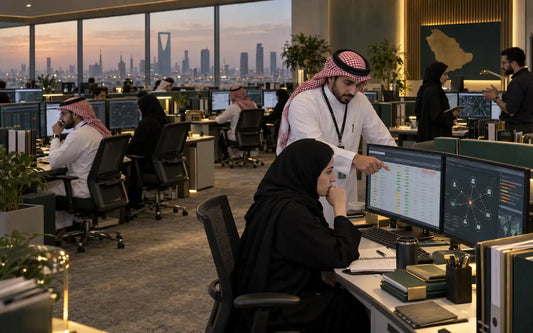
A hazard does not become dangerous only when someone gets injured. It becomes dangerous the moment a team stops noticing it.
That is why Hazard Identification KSA is becoming a core safety skill for Saudi workplaces in 2026. Safety officers, site managers, supervisors, and HSE teams are no longer expected to walk around with a basic checklist and call the job done. They need a sharper system that can identify physical, environmental, behavioural, ergonomic, digital, and contractor-related hazards before they become incidents.
Saudi Arabia’s occupational safety environment is also becoming more structured. The National Council for Occupational Safety and Health describes its role as providing a comprehensive system to enhance establishments’ compliance with occupational safety and health standards in coordination with relevant government bodies.
Disclaimer: This guide is for educational purposes only. It does not replace legal, engineering, medical, or occupational safety advice. Employers should verify current requirements with official Saudi authorities and qualified HSE professionals.
Beyond the Obvious: Hazard Identification in the 2026 Workforce
 Hazard Identification KSA used to focus mainly on visible site risks: exposed wires, blocked exits, unguarded machinery, poor housekeeping, chemical storage, falls from height, and unsafe lifting. These hazards still matter. But they are no longer the full picture.
Modern Saudi workplaces are more complex. Construction sites use digital permits and subcontractor teams. Warehouses rely on automation and scanners. Offices operate hybrid work models. Industrial facilities use sensors and connected equipment. Logistics teams face vehicle movement, fatigue, weather exposure, and time pressure.
A modern hazard walkthrough should ask more than “What can hurt someone here?” It should ask:
-
What has changed since the last inspection?
-
Which tasks are rushed or skipped?
-
Where do workers improvise?
-
Which near-misses keep repeating?
-
Which contractors are working without enough supervision?
-
Which digital tools create distraction or fatigue?
The Ministry of Human Resources and Social Development provides health and safety guidance that highlights employer duties to protect workers from hazards, occupational diseases, machinery risks, and unsafe work conditions.
Quick fact: A safety inspection finds visible issues. Hazard identification finds visible and hidden causes of harm.
The 5 Pillars of Modern Hazards: A KSA-Specific Categorization
A strong Hazard Identification KSA process works best when teams use clear categories. This helps safety officers avoid focusing only on what is easy to see.
1. Physical and mechanical hazards
These include falls, struck-by risks, moving vehicles, unguarded machinery, pressure systems, lifting operations, slips, trips, and confined spaces. These are common in construction, logistics, manufacturing, maintenance, and energy sites.
2. Chemical and environmental hazards
These include dust, fumes, gases, solvents, cleaning chemicals, poor ventilation, noise, heat, humidity, and air quality. In Saudi Arabia, heat exposure deserves special attention because outdoor work can become dangerous quickly during summer.
3. Ergonomic and human-factor hazards
These include poor workstation setup, awkward posture, repetitive movement, manual handling, long driving hours, shift fatigue, and work pressure. Ergonomics for hybrid work is especially important for office and remote teams.
4. Digital and technology-related hazards
Modern teams face new risks from mobile-device distraction, digital fatigue, overloaded dashboards, automation blind spots, poor alarm management, and cyber-physical failures. Technology can improve safety, but it can also create new hazards when workers are not trained properly.
5. Organisational and contractor hazards
Many incidents happen because responsibilities are unclear. Contractor work, poor handovers, weak supervision, rushed deadlines, language barriers, and unclear permit systems can create serious risk.
Quick comparison: Traditional vs modern hazard identification
|
Area |
Traditional Walkthrough |
Modern Hazard Identification |
|
Focus |
Visible site hazards |
Physical, digital, behavioural, and system risks |
|
Evidence |
Paper checklist |
Photos, trends, logs, dashboards |
|
Worker input |
Limited |
Workers actively report hazards |
|
Contractor review |
Often separate |
Integrated into site risk review |
|
Follow-up |
Manual reminders |
Tracked corrective actions |
A modern system does not replace the walkthrough. It makes the walkthrough smarter.
Heat Stress Management: Identifying the Kingdom’s “Invisible” Killer
 Hazard Identification KSA must treat heat stress as a major workplace hazard. It is not always visible at first. A worker may look fine but already be experiencing dehydration, dizziness, fatigue, or reduced concentration.
The risk is especially high in outdoor work, construction, logistics, maintenance, agriculture, utilities, and any role involving heavy physical effort. Heat stress can also increase the likelihood of mistakes around vehicles, machinery, and work at height.
Saudi authorities have repeatedly taken action to protect workers from direct sun exposure during peak heat periods. In 2025, MHRSD announced that the private-sector midday outdoor work ban would run from 12 noon to 3 p.m. between June 15 and September 15. (HRSD Ministry)
Heat stress warning signs to identify early
Safety officers and supervisors should watch for:
-
heavy sweating or no sweating;
-
dizziness or confusion;
-
headache or nausea;
-
unusual fatigue;
-
muscle cramps;
-
reduced coordination;
-
workers slowing down during hot hours.
Heat stress management Saudi Arabia should include shaded rest areas, drinking water, adjusted schedules, acclimatisation for new workers, supervisor observation, emergency response plans, and worker training.
Practical example: A site manager who only checks whether water is available may miss the real risk. A stronger assessment checks whether water is close enough, used regularly, supported by rest breaks, and understood by workers in their language.
AI and Computer Vision: Turning Cameras into Safety Sentinels
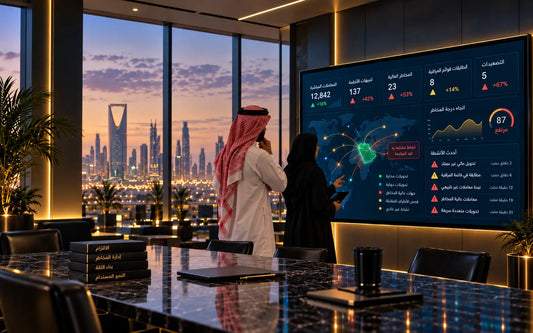
Hazard Identification KSA is becoming more technology-enabled. AI-driven tools, computer vision, sensors, and digital inspection systems can help teams detect hazards faster.
Computer vision can support site safety by identifying missing PPE, restricted-zone entry, unsafe proximity to vehicles, blocked walkways, or workers near hazardous areas. IoT sensors can monitor heat, gas, vibration, noise, or machine conditions. Dashboards can show trends from incident reports, inspections, and near-misses.
This supports AI-driven safety monitoring, but it must be handled responsibly. Cameras and AI should not become a substitute for leadership, training, or worker engagement. They should support better decisions.
AI safety monitoring vs manual observation
|
Safety Need |
Manual Observation |
AI-Driven Monitoring |
|
PPE checks |
Supervisor sees limited area |
Continuous detection in covered areas |
|
Vehicle proximity |
Depends on line of sight |
Alerts for unsafe zones |
|
Heat or gas exposure |
Periodic readings |
Sensor-based monitoring |
|
Trend analysis |
Manual review |
Pattern recognition |
|
Corrective action |
Follow-up by email |
Workflow tracking |
The best use of AI is not to punish workers. It is to identify risk patterns early. If cameras repeatedly show workers entering a shortcut through a restricted zone, the answer may be poor layout, weak signage, production pressure, or unclear traffic flow.
Key idea: AI can detect unsafe conditions, but people must still fix the system that creates them.
The JSA Reimagined: Conducting a Job Safety Analysis in 2026
 Many safety officers ask: JSA vs Hazard Identification KSA — what is the difference?
Hazard identification is broad. It looks across the workplace to find potential sources of harm. Job Safety Analysis, or JSA, focuses on a specific job or task. It breaks the task into steps, identifies hazards in each step, and defines controls before work begins.
Both are needed.
JSA vs Hazard Identification KSA
|
Item |
Hazard Identification |
Job Safety Analysis |
|
Scope |
Workplace, area, process, system |
Specific task or job |
|
Timing |
Routine and ongoing |
Before task execution |
|
Best for |
Walkthroughs, inspections, audits |
High-risk tasks, non-routine work |
|
Output |
Hazard register and controls |
Step-by-step task controls |
|
Example |
Forklift traffic risk |
Loading a heavy item with forklift |
A 2026 JSA should not be a copied form. It should be task-specific, worker-informed, and reviewed at the work location. If the task changes, the JSA should change.
How to conduct a practical JSA
Start with the job. Break it into clear steps. Identify what can go wrong at each step. Decide who could be harmed. Select controls using the hierarchy of control. Confirm that workers understand the controls. Record the JSA and review it after the job.
Example: For hot work near flammable material, the JSA should cover ignition sources, gas testing, fire watch, permit approval, ventilation, isolation, emergency response, PPE, nearby workers, and post-work monitoring.
The course Risk assessment and hazard control in the modern work environment can help supervisors and HSE teams connect hazard identification, JSA, and practical control planning.
NCOSH Compliance: Mapping Identified Hazards to National Standards
 Hazard Identification KSA should not end with a list of hazards. It should connect each hazard to controls, responsibilities, evidence, and relevant Saudi safety expectations.
The NCOSH rules and regulations page is an important official reference for safety teams reviewing occupational safety and health materials, and it was last modified in April 2026.
Saudi safety teams should also pay attention to high-risk work. The Regulation on High-Risk Occupations states that workers, employees, and supervisors involved in high-risk occupations and tasks must possess the necessary cognitive and skill-based competencies in occupational safety and health.
NCOSH compliance checklist for hazard identification
|
Checklist Item |
What to Confirm |
|
Hazard register |
Major hazards are documented and current |
|
Risk rating |
Likelihood and severity are assessed |
|
Controls |
Controls match the hierarchy of control |
|
Competency |
Workers and supervisors understand the hazard |
|
High-risk tasks |
High-risk work is reviewed before execution |
|
Reporting |
Hazards and near-misses are reported clearly |
|
Corrective actions |
Owners and deadlines are assigned |
|
Evidence |
Photos, logs, training records, and inspection results are retained |
How to report hazards to NCOSH?
In most workplaces, hazards should first be reported through the employer’s internal reporting process, supervisor, HSE team, or safety committee so that immediate controls can be applied. For external reporting or regulatory questions, employers and workers should use official NCOSH channels and current Saudi procedures where applicable. Safety officers should review NCOSH guidance regularly and maintain internal records of reported hazards, corrective actions, and closure evidence.
Important: Do not wait for a regulator to find a hazard that your team already knows about. The strongest safety teams act before inspection.
Conclusion
Hazard Identification KSA is no longer a simple walkthrough exercise. It is a modern safety discipline that combines worker observation, technical knowledge, digital tools, JSA, heat stress management, contractor control, and NCOSH-aligned compliance.
The best safety teams in Saudi Arabia will not only find obvious hazards. They will identify weak signals: fatigue, repeated near-misses, unsafe shortcuts, poor handovers, digital overload, and hidden environmental risks.
For organisations ready to strengthen their process, Risk assessment and hazard control in the modern work environment can support managers, supervisors, and HSE officers who need practical skills for identifying hazards and selecting effective controls.
FAQs
What is Hazard Identification KSA?
Hazard Identification KSA is the process of finding workplace hazards in Saudi Arabia before they cause harm. It includes physical, chemical, environmental, ergonomic, digital, behavioural, and organisational hazards.
What are the main types of workplace hazards in Saudi Arabia?
Common types include falls, machinery risks, heat stress, chemicals, electrical exposure, vehicle movement, ergonomics, fatigue, contractor risks, and digital workplace hazards.
What is the difference between JSA and hazard identification?
Hazard identification is broader and looks across the workplace. JSA focuses on one specific task and breaks it into steps to identify hazards and controls before work starts.
What should a safety inspection checklist for Saudi construction include?
It should include work at height, scaffolding, lifting, vehicle movement, heat stress, PPE, electrical safety, excavation, housekeeping, contractor control, emergency access, and corrective action tracking.
How can AI improve workplace safety in KSA?
AI can help identify unsafe patterns through cameras, sensors, dashboards, and incident data. It can detect PPE gaps, restricted-zone entry, proximity risks, heat exposure, and repeated near-miss patterns.
How should teams manage heat stress in Saudi Arabia?
Teams should identify high-risk work, adjust schedules, provide shade and water, train workers, monitor symptoms, plan emergency response, and follow official summer work restrictions where applicable.