Capital is becoming more selective in Saudi Arabia. Investors, lenders, partners, and large buyers are not only asking whether a company is profitable. They are asking whether the company can prove how it manages governance, environmental exposure, workforce responsibility, risk, transparency, and long-term sustainability.
That is why ESG Saudi Arabia is no longer a soft reputation topic. It is becoming a capital signal.
A company with weak ESG disclosure may still have strong operations, but outside stakeholders may not be able to see it. A company with stronger ESG records, clearer governance, better sustainability reporting, and measurable scorecards can look more reliable to investors and financial institutions. In a market moving toward sustainable finance, that difference can affect access to funding, supplier opportunities, valuation confidence, and investor attention.
For Saudi firms, the message is direct: ESG scores are not just about appearing responsible. They are becoming part of how the market judges business quality.
How ESG Scores Are Becoming A Capital Signal In Saudi Arabia
 ESG scores turn non-financial information into a format that investors can compare. They help the market understand whether a company is managing risks that may not appear clearly in the income statement.
A business may have growing revenue, but if it has weak governance, poor disclosure, unclear climate exposure, high workplace risk, or limited board oversight, investors may see hidden risk. Another firm may operate in the same sector but provide cleaner data on governance, environmental performance, workforce practices, supply-chain responsibility, and board accountability. That company may look more prepared for long-term capital.
This is why ESG scores Saudi Arabia discussions are moving beyond listed-company reporting teams. Finance teams, investor-relations teams, procurement leaders, risk managers, sustainability officers, and boards all have a role.
Saudi Exchange’s ESG Guidelines describe ESG disclosure as part of supporting sustainable investment and advancing ESG awareness in the Saudi capital market. The guidelines also state that Saudi Exchange has engaged with listed companies, standards-setters, index providers, ratings providers, investors, and other exchanges to advance ESG disclosure.
That matters because ESG scores are shaped by available data. If a company does not disclose clearly, rating providers and investors may rely on incomplete information, assumptions, or external signals. Poor disclosure can make a company look less mature than it actually is.
Capital does not only follow ambition. It follows confidence.
Why Saudi Firms Can No Longer Treat ESG As Disclosure Only
Many companies still treat ESG reporting Saudi Arabia work as a document exercise. They prepare a sustainability section, describe initiatives, collect some environmental data, and publish a report. That may be a starting point, but it is not enough.
Investors are not only reading for activity. They are looking for evidence of control.
A strong ESG approach should answer serious business questions. Who owns sustainability risk? How does the board monitor governance? What environmental risks could affect operations? How are employee safety, training, and retention managed? How reliable is supplier oversight? Are ESG claims supported by data? Are metrics improving or standing still?
This is where ESG disclosure becomes a decision tool. It helps capital providers judge whether the company can manage pressure over time.
Saudi firms that treat ESG only as branding may struggle to satisfy more disciplined investors. A good-looking report without measurable performance, governance ownership, and consistent data may not improve confidence. In some cases, it can create the opposite effect because it raises questions about whether the company understands material ESG risk.
The companies that benefit most from ESG are not the ones with the longest reports. They are the ones with clear data, credible governance, and visible progress.
Investor Confidence Now Depends On Governance And ESG Transparency
 Governance sits at the center of ESG because investors need to trust how decisions are made.
Environmental and social commitments are weaker when governance is unclear. A company can announce sustainability targets, but investors will ask who monitors them, how performance is measured, whether the board receives ESG data, and whether management is accountable for delivery.
Corporate governance Saudi Arabia reforms have already shaped how listed companies think about transparency, board accountability, and non-financial information. A CMA-published research paper on ESG and Saudi corporate governance reforms notes that Saudi Exchange launched ESG disclosure guidelines in 2021 and that ESG reporting can signal long-term value to investors and stakeholders.
For companies seeking capital, governance transparency reduces doubt. It shows that ESG is not sitting in a side department. It is connected to board oversight, risk management, internal controls, executive decisions, and reporting quality.
This is especially important in family businesses, fast-growing private companies, suppliers to major projects, and firms preparing for listing or debt issuance. As companies become more exposed to banks, investors, strategic partners, and institutional buyers, informal governance becomes harder to defend.
A firm may be operationally strong, but if ESG responsibilities are unclear, investor confidence can weaken. Capital providers do not want promises that depend on one enthusiastic employee. They want systems that survive leadership changes, growth, audits, and market pressure.
ESG Ratings Are Shaping Market Access And Supplier Selection
ESG ratings do not only affect investment conversations. They can also influence market access.
Large buyers, government-linked entities, international partners, lenders, and multinational clients increasingly want evidence that suppliers can manage environmental, social, and governance risk. This does not mean every supplier needs the same level of ESG sophistication as a listed company. It means weak ESG readiness can make a company harder to approve, compare, or trust.
Supplier selection is changing because buyers carry their own ESG obligations. A company that wants to improve emissions reporting, labor standards, governance controls, or supply-chain risk cannot ignore the behavior of its vendors. As a result, ESG disclosure can move from investor-relations work into procurement, vendor onboarding, and contract renewal.
For Saudi firms, this creates a competitive difference.
A company with clear ESG policies, workforce safety data, governance controls, environmental records, and supplier-risk processes can respond faster when a buyer asks for evidence. A company without that information may lose time gathering documents, explaining gaps, or rebuilding records under pressure.
The issue is not only the final ESG rating. It is readiness. When opportunity appears, the prepared company can answer.
How ESG Scorecards Turn Sustainability Data Into Business Decisions
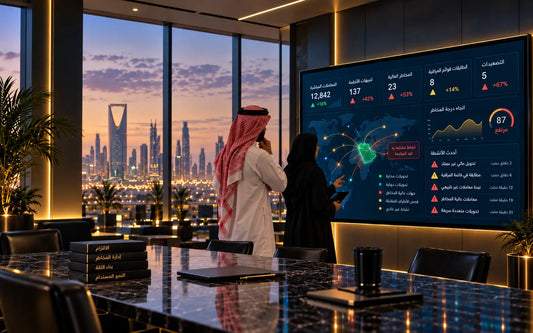
ESG scorecards help companies turn scattered sustainability information into management action. Without a scorecard, ESG data often sits across different departments. Finance holds cost and capital information. HR holds workforce data. Legal tracks governance records. Operations tracks energy, waste, safety, and incidents. Procurement tracks supplier information.
A scorecard brings those signals into one view.
|
ESG Area |
What Investors And Partners May Look For |
Why It Affects Capital Confidence |
|
Environmental |
Energy use, emissions, waste, resource efficiency, climate exposure |
Shows whether the company understands operational and transition risk |
|
Social |
Workforce safety, training, turnover, Saudization, employee wellbeing, community impact |
Indicates how responsibly the company manages people and social expectations |
|
Governance |
Board oversight, controls, ethics, transparency, risk management, disclosure quality |
Shows whether decisions are accountable and information can be trusted |
|
Data Quality |
Consistent metrics, historical comparison, clear ownership, reliable records |
Reduces uncertainty and supports stronger ESG ratings |
A useful scorecard does not need to track everything at once. It should focus on material issues: the ESG factors most relevant to the company’s sector, operations, investors, and stakeholders.
For an industrial company, energy use, emissions, safety, waste, and contractor management may be central. For a financial institution, governance, risk oversight, responsible lending, data protection, and customer treatment may matter more. For a real estate or construction firm, building efficiency, contractor safety, materials, community impact, and project governance may carry greater weight.
The value of a scorecard is not the table itself. It is the management discipline behind it. When ESG data is reviewed regularly, leaders can see where the company is improving, where risk is rising, and where evidence is too weak to support investor questions.
That is how ESG moves from reporting to decision-making.
Vision 2030 Is Moving ESG Into Capital Strategy
 ESG is becoming more important in Saudi Arabia because the market itself is changing. Vision 2030 has moved sustainability, governance, private-sector growth, investment readiness, and economic diversification into the center of business planning.
That shift affects how companies think about capital. Banks, investors, project owners, and strategic partners want to understand whether a company is prepared for the next stage of Saudi growth. Financial performance still matters, but it is no longer the only signal. Governance quality, disclosure maturity, environmental awareness, and social responsibility can all influence how a company is evaluated.
For Saudi firms, Vision 2030 ESG alignment is not about using national transformation language in reports. It is about showing that the business can operate with discipline in a market where transparency, competitiveness, sustainability, and institutional trust are becoming stronger expectations.
A company seeking capital may need to show how it manages risk, how it governs decisions, how it measures sustainability performance, and how it reports progress. The companies that can answer these questions clearly will usually look more prepared than those that rely only on revenue growth or market opportunity.
This is especially relevant for firms connected to construction, logistics, tourism, real estate, industry, energy, finance, and public-private projects. These sectors are exposed to large-scale development, financing requirements, procurement standards, stakeholder scrutiny, and long-term operational risk. ESG readiness helps them speak the language of capital more confidently.
Green Finance Is Raising ESG Expectations For Saudi Companies
Green finance is making ESG more practical for Saudi companies. It connects sustainability performance with funding, debt instruments, project eligibility, and investor confidence.
PIF’s Green Finance Framework sets out how green financing can support eligible projects aligned with Saudi Arabia’s green agenda and international standards. That matters for the wider market because it shows how sustainability is being connected to capital formation, not only corporate reputation.
Saudi Arabia’s capital-market infrastructure is also moving in this direction. The CMA’s guidelines for green, social, sustainability, and sustainability-linked debt instruments clarify the principles and frameworks used for these instruments. For companies, this strengthens the link between ESG disclosure, project credibility, and access to sustainable finance.
The message for Saudi businesses is clear: if the market is creating more sustainable finance channels, companies need better sustainability data to participate in them. A firm cannot credibly approach green finance with weak environmental records, unclear governance, or unsupported sustainability claims.
This is where ESG execution becomes valuable. Companies need to identify eligible projects, measure impact, document performance, manage risk, and report consistently. Green finance does not reward vague intention. It requires evidence.
For CFOs and finance teams, ESG is becoming part of funding strategy. For sustainability teams, finance is becoming part of ESG execution. The two functions can no longer work separately.
Saudi Companies With Strong ESG Execution Can Attract Better Capital
Strong ESG execution does not guarantee capital. But it can improve the company’s position when investors, lenders, and partners compare options.
Capital providers want lower uncertainty. ESG helps reduce uncertainty when the data is clear, the governance is credible, and the company can show that risks are being managed. This is especially important in sectors exposed to regulation, energy use, supply-chain pressure, labor risk, safety risk, project risk, or international partners.
A company with strong ESG readiness can usually respond faster to investor questions. It can explain board oversight, risk ownership, environmental metrics, workforce policies, supplier controls, and reporting boundaries. It can show progress over time instead of presenting a one-time report. It can also defend its claims with records.
Weak ESG execution creates the opposite problem. The company may need weeks to collect basic data. Departments may disagree on numbers. Policies may exist but not be implemented. Governance may be unclear. Reports may describe achievements without showing measurement.
That does not build confidence.
Saudi companies that want better access to capital should treat ESG as part of business infrastructure. That means assigning ownership, selecting relevant metrics, improving data quality, training internal teams, and linking ESG performance to risk and strategy.
The strongest firms will not be the ones that publish the most polished sustainability pages. They will be the ones that can prove how ESG decisions are made, measured, reviewed, and improved.
How ESG & Sustainability Training Helps Teams Build Stronger ESG Readiness
 Many ESG gaps do not happen because companies lack ambition. They happen because teams do not know how ESG data, governance, disclosure, finance, and operations connect.
One department may collect environmental data. Another may handle investor reporting. HR may manage workforce metrics. Legal may hold governance documents. Procurement may manage supplier requirements. Finance may deal with banks and funding discussions. If these teams work separately, ESG reporting becomes slow and inconsistent.
The ESG & Sustainability course helps teams build a clearer understanding of ESG expectations, sustainability reporting, scorecards, governance responsibilities, and capital-market relevance. For Saudi companies, that knowledge can help turn ESG from a reporting burden into a more organized readiness process.
Training is especially useful for employees who are not ESG specialists but still affect ESG outcomes. Finance teams need to understand why sustainability data matters to capital. Procurement teams need to understand supplier ESG requirements. HR teams need to understand workforce metrics. Governance teams need to understand disclosure quality. Operations teams need to understand environmental and safety data.
When teams share the same ESG language, the company can move faster. It can collect better data, prepare clearer disclosures, answer investor questions more confidently, and reduce the risk of unsupported claims.
Conclusion
ESG scores are becoming more important in Saudi Arabia because they help investors and partners compare how companies manage long-term risk. They do not replace financial performance, but they add another layer of judgment.
For Saudi firms, this changes the meaning of sustainability. ESG is no longer only about reputation, annual reports, or public image. It is becoming connected to capital access, supplier approval, investor confidence, governance quality, and green finance readiness.
Companies that want to compete seriously need more than scattered ESG activity. They need clear ownership, reliable data, board-level visibility, relevant scorecards, and disciplined disclosure. They also need teams that understand how ESG affects finance, procurement, operations, governance, and strategy.
The firms that build this capability early will be better prepared for investors, lenders, large buyers, and future market expectations.
For organizations that want to strengthen that readiness, ESG & Sustainability offers a focused way to help teams understand ESG reporting, scorecards, governance, sustainable finance, and the business value of credible sustainability execution.