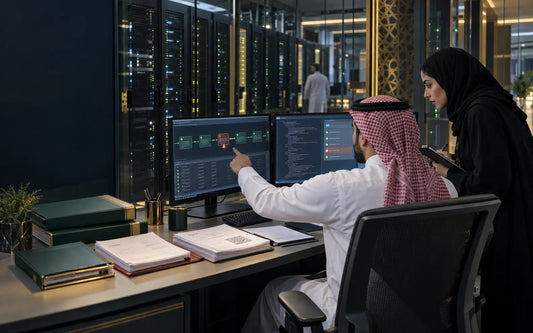
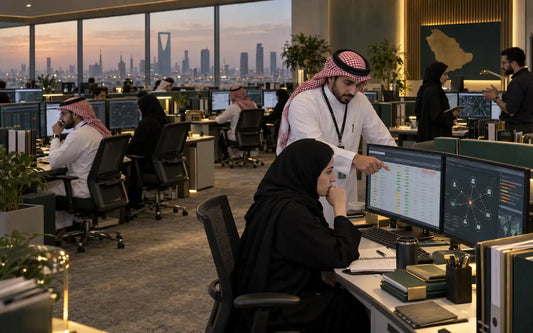
Two candidates can walk into the same interview with similar qualifications. One has more years of experience but explains ideas vaguely, avoids direct answers, and struggles to listen. The other has fewer years behind them but communicates clearly, asks thoughtful questions, understands workplace etiquette, and shows confidence without arrogance. In many Saudi workplaces, the second candidate is increasingly the one employers remember.
That is why workplace communication has become a serious career advantage. Saudi employers are not only looking for people who can perform tasks. They are looking for professionals who can explain work clearly, listen actively, collaborate across teams, handle pressure, manage workplace conflict, and communicate with respect in Arabic-English business environments.
This matters because work in Saudi Arabia is becoming more cross-functional, more digital, and more service-driven. Employees are expected to coordinate with managers, clients, suppliers, HR teams, technical staff, and sometimes international partners. A professional who cannot communicate well may slow decisions, create misunderstandings, damage trust, or struggle to move into leadership roles.
Experience still matters, but experience without communication can become invisible. Employers need people who can turn knowledge into clear action, not only people who have spent years in a role.
Skills-Based Hiring in Saudi Arabia — Why Communication Matters More Than Experience
Skills-based hiring is becoming more important because employers want proof that a candidate can perform in real workplace situations. A CV may show years of experience, but it does not always prove that a person can communicate with customers, support a team, solve problems, write clear updates, or handle feedback professionally.
This shift fits Saudi Arabia’s wider workforce development direction. The Human Capability Development Program under Vision 2030 focuses on preparing citizens with capabilities for current and future labor-market competitiveness. The official Vision 2030 page for the Human Capability Development Program connects national development with lifelong learning, competitiveness, and readiness for future work.
For employers, communication skills are practical. A technically capable employee who cannot explain problems clearly may still create delays. A manager with strong experience but poor listening skills may lose team trust. A customer-facing employee who lacks emotional control may damage the brand. A project coordinator who writes unclear updates may create confusion across departments.
That is why communication skills Saudi employers value are often connected to employability, not just personality. Clear expression, active listening, emotional intelligence, teamwork, adaptability, and professional etiquette all affect performance. In hiring decisions, these skills can separate a promising candidate from a risky one.
For professionals, this means communication should not be treated as a soft extra. It is a core workplace skill that affects interviews, probation performance, promotions, leadership readiness, and long-term career mobility.
Clear Expression & Workplace Communication Skills Saudi Employers Test For
 Clear expression is one of the most important workplace communication skills in Saudi Arabia because business moves faster when people communicate precisely. Employers want professionals who can explain what happened, what is needed, who is responsible, and what decision must be made.
Clear expression shows up in many daily situations. An employee may need to write a status update, explain a delay, present a recommendation, answer a client question, summarize a meeting, or escalate a problem to a manager. If the message is unclear, the team loses time. If the message is too emotional, the issue may become personal. If the message lacks detail, the decision may be delayed.
Saudi workplaces also often involve multiple communication channels: email, WhatsApp, Microsoft Teams, calls, meetings, reports, and face-to-face conversations. Each channel requires judgment. A complex issue may need a written summary, not a long voice note. A sensitive matter may require a private meeting, not a group chat. A client update may need formal language, not casual shorthand.
Misk’s communication skills program highlights active listening, clear expression, body language, emotional understanding, and handling challenging communication situations as key workplace communication capabilities.
Active Listening & Emotional Intelligence in Saudi Workplace Success
Many workplace communication problems happen because people listen only to reply, not to understand. Active listening is different. It means giving attention, asking clarifying questions, noticing tone, confirming meaning, and avoiding assumptions before responding.
Active listening is especially valuable in Saudi workplaces where teams may include different nationalities, communication styles, languages, and professional backgrounds. A supervisor may need to understand a worker’s safety concern. A sales employee may need to understand a client’s hesitation. An HR professional may need to listen carefully during a grievance. A manager may need to understand why a team is resisting a new process.
Emotional intelligence at work supports active listening because communication is not only about words. It is also about timing, tone, pressure, respect, and self-control. A professional with emotional intelligence can disagree without embarrassing others, receive feedback without becoming defensive, and respond to frustration without escalating conflict.
These skills matter because Saudi workplaces often place high value on respect, relationship-building, and professional reputation. A person who communicates with emotional control is more likely to gain trust from managers, colleagues, and clients.
Employers value active listening because it improves accuracy. Misunderstood instructions, repeated mistakes, and unresolved complaints often begin with poor listening. A professional who listens well reduces rework, supports better decisions, and helps teams avoid unnecessary conflict.
Cooperation, Problem-Solving & Social Skills Saudi Employers Value Over Degrees
 Degrees and technical knowledge help professionals enter the job market, but cooperation and problem-solving often determine how far they go. Saudi employers increasingly need people who can work across departments, support team goals, manage pressure, and solve problems without blaming others.
A professional may be highly qualified but difficult to work with. They may resist feedback, avoid responsibility, create tension, or fail to coordinate. In contrast, a less experienced employee who communicates clearly, supports colleagues, and helps solve problems can become more valuable to the team.
Bayt’s discussion of soft skills in the UAE and Saudi Arabia identifies communication, teamwork, adaptability, problem-solving, time management, leadership, and emotional intelligence as skills employers look for in candidates. Its article on the role of soft skills in landing a job in the UAE and Saudi Arabia supports what hiring managers already see in practice: technical ability alone does not guarantee workplace success.
Problem-solving and communication skills are closely connected. A good problem-solver does not simply point out what is wrong. They explain the issue clearly, identify possible causes, involve the right people, and suggest workable next steps. They also know when to escalate and when to solve within their own responsibility.
Cooperation is equally important because many workplace results depend on shared effort. A project may involve operations, finance, HR, procurement, IT, and customer service. If communication breaks down between teams, even simple tasks become slow. Employers value professionals who can cooperate without needing constant supervision.
This is why workplace communication skills in Saudi Arabia affect more than interview performance. They influence daily productivity, team trust, customer experience, leadership potential, and career growth.
Adaptability & Communication in Saudi Arabia’s Rapidly Changing Job Market
A professional who communicates well in only one fixed situation may still struggle in today’s Saudi workplace. Employers increasingly value people who can adjust their communication style when the audience, pressure, task, or work environment changes.
Adaptability matters because many Saudi organizations are moving through rapid transformation. Teams are working with new systems, new policies, new customer expectations, hybrid communication channels, faster reporting cycles, and more cross-functional projects. A professional may need to speak formally with senior leadership in the morning, coordinate with a technical team in the afternoon, and explain a problem to a client before the day ends. Each situation requires a different tone, level of detail, and communication method.
The Human Capability Development Program under Vision 2030 focuses on preparing citizens for current and future labor-market competitiveness, and that direction makes adaptability a career skill, not only a personality trait. The program’s official page on human capability development connects workforce readiness with preparation for both local and global labor markets.
Adaptable communicators do not panic when a plan changes. They ask better questions, clarify priorities, summarize next steps, and help the team move forward. This is especially valuable in project-based workplaces, customer-facing roles, digital transformation teams, HR departments, and operational environments where delays or confusion can affect performance.
In interviews and performance reviews, employers may not always say, “We are testing adaptability.” Instead, they ask about a difficult project, a sudden change, a conflict with a colleague, or a time when priorities shifted. The candidate who explains the situation clearly, accepts responsibility, and shows calm problem-solving usually leaves a stronger impression.
Arabic-English Bilingual Communication & Localized Professional Etiquette in KSA
 Bilingual communication is a major advantage in Saudi Arabia because many workplaces operate between Arabic and English every day. A report may be written in English, a client meeting may happen in Arabic, a system interface may use English, and a manager may expect updates in both languages depending on the audience.
This does not mean every employee must speak both languages perfectly. It means professionals should understand how to communicate clearly, respectfully, and appropriately when language expectations shift. A bilingual professional who can summarize a technical point in Arabic, prepare an English update, or translate business meaning without losing accuracy becomes more useful across teams.
Professional etiquette in KSA also affects communication. Respectful greetings, appropriate tone, careful timing, and awareness of hierarchy can shape how a message is received. A correct message delivered with poor etiquette can still create tension. A difficult request delivered with professionalism is more likely to be accepted.
Localized professional etiquette is not about using complicated language. It is about understanding the workplace setting. A message to a senior executive may need to be more formal. A team update should be clear and efficient. A client message should be respectful and complete. A sensitive issue should not be handled casually in a group chat.
After the section on bilingual communication and professional etiquette, Professional Communication & Work Etiquette fits naturally as a structured learning path for employees who want to strengthen workplace communication, professional conduct, feedback handling, and career readiness in Saudi Arabia.
Handling Challenging Conversations, Feedback & Workplace Conflict Professionally
Many employees communicate well when everything is normal. The real test comes during difficult conversations. A manager gives negative feedback. A client complains. A colleague misses a deadline. A supervisor rejects a request. A team member disagrees publicly. These moments show whether a professional has real workplace communication skills.
Handling workplace conflict professionally does not mean avoiding disagreement. It means discussing the issue without disrespect, blame, or emotional escalation. Strong communicators separate the person from the problem. They explain the concern clearly, listen to the other side, and focus on a workable next step.
Feedback is another important area. Some employees become defensive when they receive feedback, while others accept feedback silently but do not act on it. Employers value professionals who can receive feedback, ask clarifying questions, and show improvement. This signals maturity and leadership potential.
Misk’s communication skills program includes handling challenging conversations, emotional awareness, active listening, and clear expression as part of professional communication development through its Communication Skills program. These skills matter because workplace conflict is not solved by technical knowledge alone. It requires listening, judgment, timing, and emotional control.
Saudi employers also value employees who know when to escalate. Not every issue should become a formal complaint, but serious matters should not be hidden. A professional communicator understands when to resolve directly, when to document, and when to involve HR or management.
Communication Skills for Leadership, Teamwork & Career Mobility in KSA
 Communication is one of the strongest signals of leadership readiness. A professional may be technically strong, but if they cannot explain goals, align people, give feedback, manage disagreements, or represent the team clearly, promotion becomes harder.
Leadership communication is not about speaking the most. It is about making direction clear. Strong leaders explain expectations, remove confusion, listen to concerns, and make people feel accountable without creating fear. They know how to speak with senior management, support team members, and communicate across departments.
Teamwork also depends on communication. When employees do not share updates, repeat mistakes, ignore messages, or avoid difficult conversations, teamwork becomes slow and frustrating. When employees communicate clearly, teams move faster because everyone understands what has changed, what is expected, and who owns the next step.
Career mobility in Saudi Arabia increasingly depends on these skills. Employees who communicate well can move from execution roles into coordination, supervision, client management, training, sales, HR, operations, project management, and leadership positions. Communication opens career doors because it makes other skills easier to see.
For professionals preparing to lead teams or improve career mobility, Leadership & Management Skills can support the development of clearer communication, stronger feedback habits, better teamwork, and more confident leadership behavior.
Conclusion:
Experience can help a professional understand the work, but communication helps others trust that professional with responsibility. Saudi employers value people who can express ideas clearly, listen carefully, cooperate with teams, adapt to change, communicate across Arabic-English workplace settings, handle conflict professionally, and lead with confidence.
The professionals who grow fastest are often not the loudest or the most senior. They are the ones who make work easier for others. They reduce confusion, clarify decisions, respect workplace etiquette, manage feedback, and help teams move forward.
For employees, supervisors, team leaders, and managers, Professional Communication & Work Etiquette offers a structured way to strengthen workplace communication, professional conduct, feedback handling, teamwork, and leadership readiness. In a skills-based job market, communication is no longer just a soft skill. It is a career advantage.
FAQs
Why do Saudi employers value communication skills over experience?
Saudi employers value communication skills because employees must explain work clearly, cooperate across teams, handle clients, manage feedback, and support business decisions. Experience matters, but poor communication can reduce the value of that experience.
What workplace communication skills are most important in Saudi Arabia?
Important workplace communication skills include clear expression, active listening, emotional intelligence, professional etiquette, problem-solving communication, bilingual Arabic-English communication, feedback handling, and conflict management.
How does bilingual communication help professionals in KSA?
Bilingual communication helps professionals work across Arabic and English business environments. It supports client communication, internal reporting, stakeholder coordination, and stronger collaboration in diverse teams.
Why is professional etiquette important in Saudi workplaces?
Professional etiquette affects trust, respect, and how messages are received. Tone, timing, greetings, hierarchy awareness, and respectful language can all influence workplace relationships and career growth.
How can employees handle workplace conflict professionally?
Employees can handle conflict professionally by staying calm, focusing on the issue, listening before responding, avoiding blame, documenting serious matters, and using proper escalation channels when needed.
Can communication skills improve career mobility?
Yes. Strong communication skills help employees move into supervisory, leadership, client-facing, coordination, HR, operations, and project roles because they show readiness to manage people, tasks, and workplace expectations.
Who should take workplace communication training?
Workplace communication training is useful for employees, supervisors, team leaders, HR professionals, customer-facing staff, managers, and anyone preparing for leadership or career growth in Saudi Arabia.