Introduction
Saudi Arabia’s business landscape is changing fast. Sustainability is no longer a side topic. It is becoming part of how companies grow, attract investors, manage risk, and build long-term trust. That is exactly why ESG Certification Saudi Arabia is becoming a more valuable search term for professionals in 2026.
Across the Kingdom, major economic reforms and sustainability initiatives are pushing businesses to think beyond profit alone. Saudi Vision 2030 continues to emphasise diversification, sustainability, and better governance, while projects linked to the Saudi Green Initiative focus on emissions reduction, afforestation, and land and sea protection. At the same time, the Saudi Exchange says it remains focused on raising awareness and encouraging listed companies to disclose ESG, showing that the market is moving steadily towards stronger sustainability practices.
For professionals, this creates a clear opportunity. Employers increasingly need people who understand ESG frameworks, reporting, stakeholder expectations, and governance standards. A strong ESG qualification can help bridge that skills gap.
In this guide, we will look at what ESG certification is, why it matters in Saudi Arabia, and why it is becoming a smart career move for professionals across finance, compliance, strategy, and sustainability.
What Is ESG Certification?

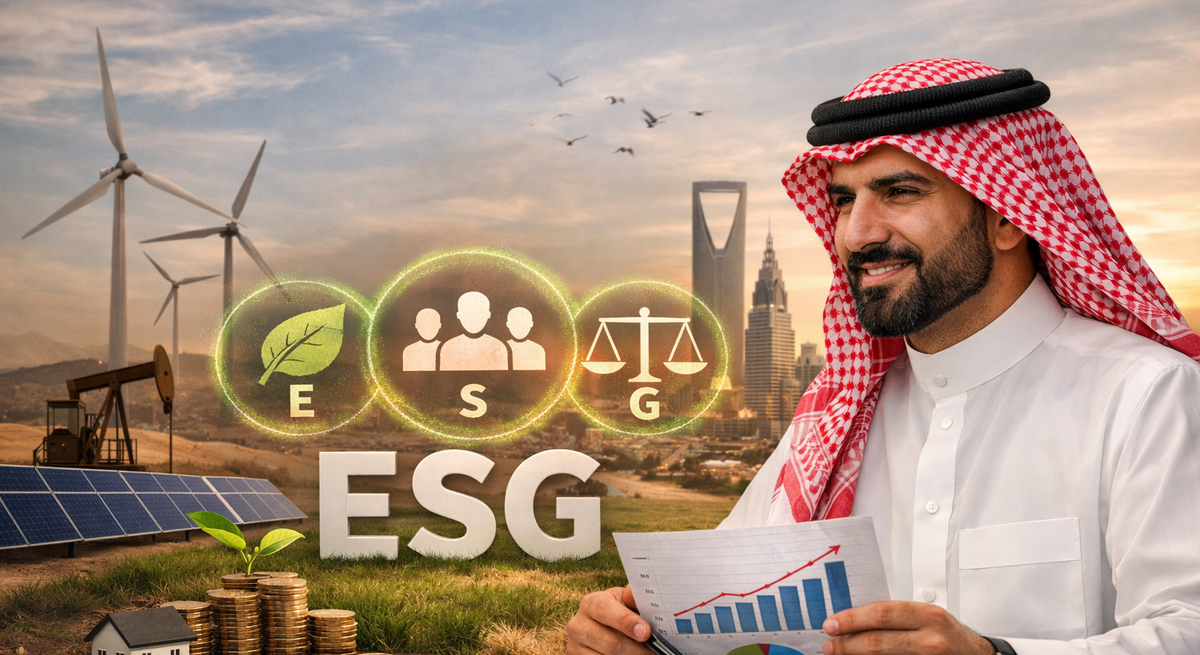
At its core, ESG Certification Saudi Arabia refers to professional training that helps learners understand the three pillars of ESG:
-
Environmental
-
Social
-
Governance
These programmes usually cover how organisations manage sustainability issues, measure ESG performance, respond to stakeholder expectations, and align business decisions with responsible governance. Current training providers consistently position ESG certification around practical business use, including ESG metrics, strategy, implementation, reporting, and risk management.
Quick fact box: What ESG certification usually covers
|
Area |
What professionals learn |
|
Environmental |
Climate risk, emissions, energy, sustainability strategy |
|
Social |
Workforce issues, stakeholder impact, social responsibility |
|
Governance |
Ethics, transparency, compliance, board oversight |
|
Business application |
Reporting, strategy, decision-making, risk analysis |

A good ESG certification does more than explain theory. It helps professionals answer practical questions such as:
-
How do companies apply ESG in daily operations?
-
Which reporting frameworks matter most?
-
How does ESG affect investors and regulators?
-
What skills do employers expect in ESG-related roles?
That is why ESG training is becoming relevant not only for sustainability teams, but also for professionals in finance, investor relations, compliance, procurement, and leadership roles. Some current course providers explicitly target these wider audiences, not just environmental specialists.
Why ESG Is Growing Rapidly in Saudi Arabia
The rise of ESG Certification Saudi Arabia makes sense only when you look at the broader market shift. ESG is growing in Saudi Arabia because business, investment, and policy priorities are moving in the same direction.
1. Vision 2030 is creating stronger sustainability momentum
Saudi Arabia’s transformation agenda has made sustainability a much more visible business priority. The Saudi Green Initiative, launched under the wider Vision 2030 agenda, highlights targets around emissions reduction, afforestation, and ecosystem protection. This pushes companies to build skills in sustainability planning, disclosure, and governance.
2. The capital market is paying closer attention to ESG
The Saudi Exchange has published ESG guidance and says its aim is to help listed companies navigate ESG and support sustainable, inclusive capital market growth. That matters because once capital markets start focusing on ESG, companies need professionals who can understand reporting standards, ESG risks, and governance expectations.
3. Global frameworks are shaping local expectations
The GRI Standards describe themselves as a global framework that enables organisations to understand and report their impacts on the economy, environment, and people in a comparable and credible way. As Saudi companies increasingly align with global practice, professionals with ESG knowledge become more useful across sectors.
4. Employers are already training for these skills
Current ESG course and training pages tend to focus on the same themes: reporting standards, implementation, strategy integration, stakeholder management, and risk. That gives a good clue about where employer demand is heading. In simple terms, companies do not just want awareness. They want people who can apply ESG in real business settings.
Why ESG Certification Matters for Professionals

For ambitious professionals, ESG Certification Saudi Arabia is not just another certificate. It can be a career signal.
Based on current training-market positioning, ESG certification is valued because it helps professionals improve ESG knowledge, support better decision-making, understand reporting, and strengthen compliance and stakeholder trust.
In Saudi Arabia, those benefits are becoming more relevant as ESG expectations spread across listed companies, consultants, large projects, and corporate strategy teams.
Why professionals are paying attention
-
It improves career relevance. ESG now touches finance, compliance, operations, procurement, and strategy.
-
It strengthens credibility. A structured qualification shows that you understand more than the buzzwords.
-
It supports career mobility. ESG skills are useful in Saudi Arabia and across wider regional and global markets.
-
It helps with practical application. The strongest courses cover frameworks, reporting, strategy, and implementation, not just awareness.
ESG certification vs general sustainability awareness
|
Feature |
ESG Certification |
General sustainability awareness |
|
Depth |
Structured and role-focused |
Broad and introductory |
|
Business value |
High for reporting, governance, risk, strategy |
Useful but less specialised |
|
Employer signal |
Stronger |
Weaker |
|
Best for |
Professionals building ESG careers |
Readers exploring the topic |
This difference matters. Many professionals already understand that sustainability is important. What employers increasingly need, however, is someone who can turn that awareness into action.
That is where a focused ESG Certification becomes more useful. It can help learners build knowledge in reporting standards, governance principles, materiality, stakeholder communication, and ESG decision-making. For professionals who want a more structured route into this space, an ESG Certification course can be a practical step towards building job-ready knowledge.
ESG Certification vs Traditional Sustainability Training
Another reason ESG Certification Saudi Arabia matters is that ESG training is broader than many older sustainability courses.
Traditional sustainability training often focuses mainly on environmental topics such as resource use, emissions, or operational impact. ESG certification usually goes further by connecting environmental issues with governance, investor expectations, compliance, and business strategy. That is also how many current ESG course providers frame their offer.
Simple comparison
|
Topic |
ESG Certification |
Traditional sustainability training |
|
Main focus |
Environment, social issues, governance, reporting, business risk |
Mostly environmental sustainability |
|
Best suited to |
Corporate professionals, finance teams, compliance, strategy leaders |
Environmental or CSR-focused roles |
|
Outcome |
Broader business and reporting capability |
Narrower sustainability awareness |
For Saudi professionals, that wider scope is important. Companies are not only trying to reduce impact. They are also trying to improve governance, communicate with investors, and align with market expectations.
Careers That Benefit from ESG Certification
In Saudi Arabia, ESG Certification Saudi Arabia is relevant to far more than one niche job title. As ESG expectations spread across listed companies, consulting firms, project developers, and large corporate groups, professionals in several functions can benefit from ESG training. The Saudi Exchange’s ESG guidelines are aimed at helping listed companies understand ESG, prioritise material issues, and consider reporting approaches, which is a sign that ESG knowledge now matters across business functions, not only in sustainability teams.
Roles that can benefit most
-
ESG analysts
-
Sustainability managers
-
Compliance and risk professionals
-
Investor relations specialists
-
Corporate strategy professionals
-
Procurement and supply chain managers
-
Finance and reporting teams
This is also reflected in the jobs market. Current Saudi job boards show active openings for ESG and sustainability roles, while wider sustainability hiring in the Kingdom includes reporting, engineering, advisory, and senior management positions.
Quick comparison: Who benefits most?
|
Professional background |
Why ESG certification helps |
|
Finance |
Supports ESG reporting, investor communication, risk awareness |
|
Compliance |
Strengthens governance and disclosure knowledge |
|
Sustainability |
Broadens business, reporting, and governance capability |
|
Strategy |
Helps align ESG with growth, value, and stakeholder expectations |
|
Operations |
Improves understanding of implementation and measurable ESG impact |
For many professionals, the value is simple: ESG knowledge makes their current role stronger while also opening doors to future roles in reporting, assurance, sustainability strategy, and responsible investment support.
Skills You Gain from ESG Certification
A strong ESG Certification Saudi Arabia programme should help professionals build practical, business-ready skills. Current ESG course pages consistently emphasise topics such as ESG frameworks, implementation, strategy integration, disclosure, and risk, suggesting that the market values applied capability more than surface-level awareness.
Core skills professionals usually gain
-
Understanding ESG frameworks such as GRI and related disclosure approaches
-
Materiality thinking to identify what matters most to a business
-
ESG reporting knowledge for internal and external communication
-
Governance awareness covering ethics, accountability, and oversight
-
Risk analysis skills linked to sustainability and business resilience
-
Stakeholder communication for management, investors, and wider audiences
Why these skills matter in Saudi Arabia
Saudi Arabia’s sustainability push is not only policy-led. It is also becoming operational. The Saudi Green Initiative says the Kingdom has activated more than 85 initiatives spanning emissions reduction, afforestation, biodiversity protection, and protected areas. That kind of activity increases the need for professionals who can connect sustainability goals with governance, reporting, and measurable outcomes.
For learners who want a structured route into these areas, an ESG Certification can help turn broad interest into practical knowledge. That is especially useful for professionals who need to discuss ESG confidently with management, clients, auditors, or investors.
ESG Salaries and Career Opportunities in Saudi Arabia

The case for ESG Certification Saudi Arabia is not only about knowledge. It is also about career direction. While exact salary figures vary widely by industry, seniority, and employer, the current jobs market clearly shows active demand for ESG and sustainability talent in Saudi Arabia, including roles in Riyadh and other major centres.
Where demand is growing
-
Consulting and advisory
-
Energy and renewables
-
Large-scale development projects
-
Listed companies and investor-facing businesses
-
Infrastructure and engineering
-
Corporate governance and reporting teams
That demand aligns with the wider direction of the Kingdom. The Saudi Green Initiative sets out national environmental targets, including cutting carbon emissions and advancing green transition goals, while Saudi capital market guidance continues to encourage stronger ESG understanding and disclosure.
What this means for professionals
Even without promising inflated salary claims, the signal is positive:
-
ESG is becoming more visible in hiring
-
ESG knowledge is becoming more transferable across roles
-
ESG capability can support career progression into strategic functions
-
ESG training can strengthen a CV for both Saudi and regional opportunities
So, for professionals asking whether ESG is “worth it”, the better question may be: Can you afford to ignore a capability that is becoming more relevant across so many business areas?
How to Choose the Right ESG Certification
Not every course delivers the same value. If you are comparing options for ESG Certification in Saudi Arabia, look for a programme that feels practical, current, and relevant to the Saudi and wider Gulf market.
What to look for in a course
-
Clear coverage of ESG fundamentals
-
Practical understanding of reporting and disclosure
-
Business relevance, not only theory
-
Coverage of governance and stakeholder issues
-
Examples linked to real organisations and market expectations
-
Flexible learning format for working professionals
The strongest programmes usually explain not only what ESG is but also how businesses use it in reporting, strategy, and decision-making. That matters because official Saudi capital-market guidance already encourages companies to navigate ESG, assess priority issues, and think seriously about reporting options.
For professionals who want structured, career-relevant learning, your ESG Certification course can be positioned naturally here as a practical option for understanding ESG principles, reporting logic, governance priorities, and implementation in a Saudi-market context.
Future of ESG Careers in Saudi Arabia
Looking ahead, the outlook for ESG Certification Saudi Arabia remains strong. Saudi Arabia’s official sustainability agenda is long-term, not short-term. The Saudi Green Initiative frames climate action, energy transition, and environmental protection as part of a broader national development path, while the Saudi Exchange continues to position ESG guidance as a catalyst for sustainable and inclusive capital market growth.
That suggests three likely trends for 2026 and beyond:
-
More ESG literacy across corporate teams
-
Stronger reporting and disclosure expectations
-
More career value for professionals who can apply ESG practically
Global frameworks will also continue shaping local expectations. GRI says its standards are regularly reviewed to reflect global best practice and stakeholder and regulatory information demands, which means ESG capability will remain a moving target rather than a one-time learning exercise.
For Saudi professionals, that creates a clear takeaway: ESG is becoming part of mainstream business capability. Professionals who build those skills early are likely to be in a stronger position as expectations mature.
Conclusion
The rise of ESG Certification Saudi Arabia reflects a wider change in the Kingdom’s business environment. Sustainability, disclosure, governance, and responsible growth are becoming more important to companies, investors, and major national initiatives. Saudi capital-market guidance, official green initiatives, and global reporting frameworks all point in the same direction: ESG knowledge is becoming more useful, not less.
For professionals, this is a practical opportunity. ESG certification can help build stronger business understanding, improve career relevance, and support movement into roles linked to reporting, risk, sustainability, compliance, and strategy. In a market that is steadily increasing its focus on responsible growth, structured ESG learning is becoming a smart professional investment.
For that reason, an ESG Certification is no longer just a niche qualification. In Saudi Arabia, it is increasingly becoming a credible way to prepare for how modern business is evolving.
FAQ Section
What is ESG certification?
ESG certification is professional training that helps learners understand environmental, social, and governance principles and how they apply to business decisions, reporting, risk, and governance. Current market offerings typically focus on practical business use, not just theory.
Is ESG certification valuable in Saudi Arabia?
Yes. ESG certification is becoming more valuable in Saudi Arabia because the Kingdom is strengthening its focus on sustainability, environmental action, and better governance, while the Saudi Exchange continues encouraging ESG awareness and disclosure among listed companies.
Who should take ESG certification?
It is useful for professionals in finance, compliance, sustainability, reporting, strategy, procurement, and investor-facing roles. It is especially relevant for people who want to connect sustainability issues with practical business decisions.
What careers require ESG certification?
No role requires one universal certificate, but ESG-related careers increasingly benefit from structured training. Roles include ESG analyst, sustainability manager, ESG consultant, compliance specialist, and reporting professional, and current Saudi job listings show active demand across ESG and sustainability functions.
How can I become an ESG professional in Saudi Arabia?
A sensible route is to learn ESG fundamentals, understand reporting frameworks and governance principles, build business awareness, and complete a practical ESG Certification that helps you apply the concepts in real organisational settings. Saudi market momentum and official guidance suggest this skill set will become increasingly relevant over time.