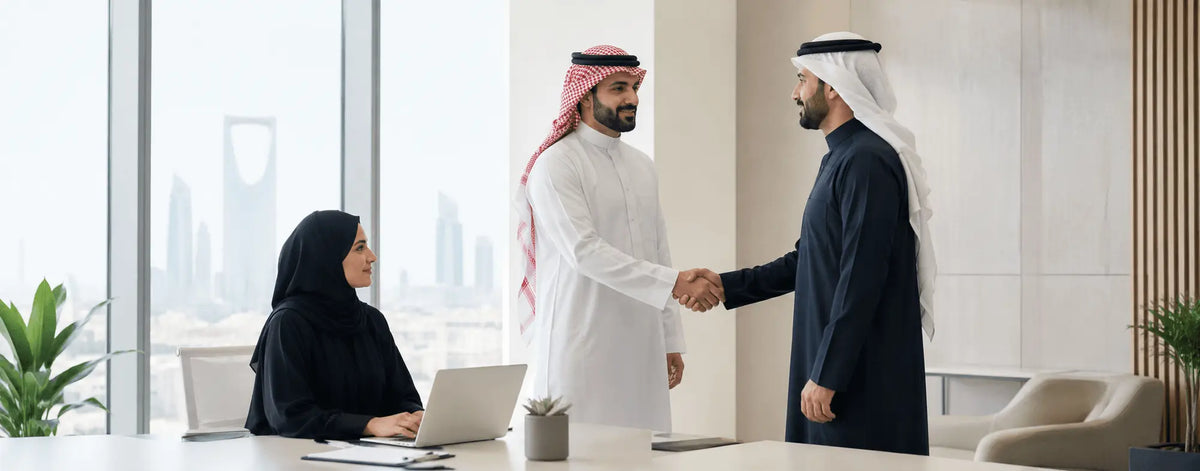
Your first meeting in Saudi Arabia may be remembered less for your slide deck and more for how you greeted the room, listened, dressed, followed up, and showed respect.
That is why Professional Work Etiquette KSA matters for expats, new hires, HR managers, and international teams entering the Saudi workplace. In 2026, Saudi business culture is more global, digital, diverse, and fast-moving than ever. Yet respect, hospitality, hierarchy, trust, and personal credibility still shape how professional relationships grow.
Under Vision 2030, Saudi Arabia has placed strong focus on labour market development, women’s participation, private-sector growth, and a more competitive economy. The official Vision 2030 overview highlights the Kingdom’s economic transformation and the expanding role of Saudi talent in the workforce.
Disclaimer: This guide explains workplace culture and professional etiquette in general terms. Practices may differ by region, sector, company, seniority, and personal preference.
The “Neo-Saudi” Professional: Etiquette in the Age of Vision 2030
 Professional Work Etiquette KSA is changing because Saudi workplaces are changing. The modern Saudi professional may work in a multinational company, a government-linked entity, a startup, a family business, a hospital, a fintech firm, or a giga-project environment. Meetings may happen in Riyadh, Jeddah, Dammam, NEOM, or online with global teams.
But the core remains human: respect, patience, relationship-building, and professionalism.
Saudi business culture often values trust before transaction. A meeting may begin with greetings, coffee, or personal conversation before moving into business. For some foreign professionals, this can feel slow. In reality, it is part of building confidence.
Key idea: In Saudi Arabia, professionalism is not only about efficiency. It is also about respect.
This does not mean the workplace is old-fashioned. The “Neo-Saudi” professional is comfortable with modern tools, global standards, and performance expectations. The best approach is to combine global professionalism with local cultural intelligence.
The Majlis vs. The Boardroom: Navigating Formal and Informal Spaces
 A major part of Professional Work Etiquette KSA is understanding the difference between formal and informal spaces.
The boardroom is structured. Titles matter. Agendas matter. Seniority is visible. People may expect preparation, clear speaking, and polished conduct.
The majlis, or social-style gathering, is more relational. Conversation may be wider. Hospitality matters. People may discuss family, travel, general business, or shared interests before moving to the main topic. You may still be “doing business,” but the tone is warmer and less direct.
Majlis vs. Boardroom
|
Space |
What Matters Most |
Best Behaviour |
|
Boardroom |
Structure, clarity, respect for hierarchy |
Be prepared, concise, and respectful |
|
Majlis-style setting |
Trust, hospitality, personal rapport |
Be patient, gracious, and present |
|
Client dinner |
Relationship-building |
Avoid rushing into negotiation |
|
Virtual meeting |
Professional clarity |
Confirm time, agenda, and follow-up |
For expats, the safest rule is simple: do not rush the relationship. Listen first. Let the host set the rhythm. Show appreciation for hospitality. Avoid dominating the conversation.
In business meetings etiquette in Saudi Arabia, patience is a strength, not a weakness.
Beyond “Inshallah”: Time Perception and Commitment in 2026
People sometimes misunderstand the phrase “inshallah,” which means “God willing.” In Saudi professional settings, it can be used sincerely, socially, or conversationally. Do not assume it means “no” or “maybe.” Look at context, seniority, relationship, and follow-up.
In 2026, Saudi business is faster and more deadline-driven, especially in regulated sectors, consulting, technology, finance, logistics, healthcare, and giga-projects. Still, relationships and flexibility remain important.
For Professional Work Etiquette KSA, the right balance is respectful clarity.
Use phrases like:
“We will share the draft by Wednesday.”
“Shall I confirm the next step by email?”
“Would Sunday morning work for the follow-up?”
“Please let me know if priorities change.”
This style keeps commitment clear without sounding aggressive.
Practical example: Instead of saying, “You promised this today,” say, “I wanted to check whether the document is still expected today or if the timeline has changed.” It protects the relationship while keeping the work moving.
For organisations onboarding multicultural teams, structured training such as Professional communication and work etiquette can help employees understand how respectful communication, follow-up, and local expectations work together in Saudi workplaces.
Gender Dynamics and Inclusivity: The Modern Saudi Workforce
 A modern guide to Professional Work Etiquette KSA must address gender dynamics carefully. Saudi workplaces are now more diverse, with women working across leadership, government, finance, healthcare, technology, education, entrepreneurship, and professional services.
MHRSD states that Article 3 of the Labour Law provides equality in the right to work without discrimination based on gender, disability, age, or any other form of discrimination during work, hiring, or advertising. (HRSD) MHRSD also highlights initiatives supporting women’s empowerment, leadership, diversity, flexible work, and women’s career development through its Women’s Empowerment resources.
For daily etiquette, the best rule is professional respect. Do not make assumptions about a colleague’s role, seniority, availability, or preferences based on gender. Address women and men with the same professional seriousness.
Practical Inclusivity Tips
|
Situation |
Better Practice |
|
Meeting introductions |
Introduce everyone by role and title |
|
Conversation |
Keep tone professional and respectful |
|
Seating or greeting |
Follow the host’s lead |
|
Team decisions |
Include relevant voices equally |
|
Workplace conduct |
Avoid personal comments or stereotypes |
Handshakes can vary by individual preference. When unsure, wait for the other person to initiate. A polite verbal greeting is always safe.
Titles and Deference: Addressing Leadership Correctly
Respect for hierarchy remains important in Saudi business culture. This does not mean junior people cannot contribute. It means tone, timing, and respect matter.
When addressing Saudi executives, use titles unless invited to do otherwise. Common professional forms include “Mr.,” “Ms.,” “Doctor,” “Engineer,” “Professor,” “Sheikh,” or formal job titles such as “Chairman,” “CEO,” or “Director.” In Arabic-speaking settings, “Ustadh” for Mr./sir and “Ustadha” for Ms./madam may be used respectfully.
How to Address Saudi Executives Correctly
Use the most formal reasonable title at first. Listen to how others address the person. Do not shorten names without permission. Avoid overly casual humour early in the relationship. When emailing, open with a respectful greeting and clear purpose.
Example: “Dear Dr. Al-Qahtani” is safer than “Hi Ahmed” unless you already have that relationship.
Deference does not mean silence. A strong professional can disagree respectfully. Use evidence, soften the tone, and avoid public embarrassment.
Networking and “Wasta” 2.0: Relationships in a Compliant World
Relationships matter in Saudi professional life. But in 2026, relationship-building must sit inside compliance, fairness, and transparent decision-making.
The traditional idea of “wasta” is often described as influence through relationships. In a modern workplace, the healthier version is not favouritism. It is trust-building, reputation, introductions, and professional credibility.
This is important for HR managers standardising workplace values KSA. Employees should understand that networking is acceptable, but unfair advantage, conflict of interest, bribery, or bypassing policy is not.

Cross-cultural communication works best when relationships are built openly:
-
Meet people before you need something.
-
Follow up politely.
-
Respect hierarchy.
-
Give credit.
-
Avoid pressure tactics.
-
Keep decisions documented.
Saudi professional conduct in 2026 should combine warmth with governance.
Key idea: Relationships open doors. Compliance keeps them open.
The 2026 KSA Etiquette Checklist: A 10-Point Readiness Test
Use this checklist for new hires, expat onboarding, HR induction, or pre-meeting preparation.
|
# |
Etiquette Area |
Readiness Question |
|
1 |
Greeting |
Do I know the right level of formality? |
|
2 |
Titles |
Am I using the correct title or role? |
|
3 |
Dress |
Is my appearance professional and modest for the setting? |
|
4 |
Time |
Have I confirmed the meeting time and follow-up? |
|
5 |
Conversation |
Am I allowing space for relationship-building? |
|
6 |
Gender respect |
Am I treating everyone with equal professionalism? |
|
7 |
Hierarchy |
Do I understand who the decision-maker is? |
|
8 |
Hospitality |
Am I showing appreciation without rushing? |
|
9 |
Documentation |
Are decisions and next steps confirmed politely? |
|
10 |
Compliance |
Are relationships handled transparently and ethically? |
Professional Dressing for Work in KSA 2026
Dress expectations vary by sector and company. Banks, government-linked entities, consulting, and executive meetings usually lean formal. Start conservative and adjust after observing the workplace.
For men, a suit or smart business attire is usually safe in formal settings. For women, professional and modest business attire is appropriate. Saudi women may wear abaya or other professional attire depending on workplace norms and personal choice. Expats should follow company dress codes and local expectations.
FAQs
What is Professional Work Etiquette KSA?
Professional Work Etiquette KSA refers to the expected workplace behaviours in Saudi Arabia, including greetings, titles, meetings, dress, hierarchy, communication, hospitality, gender respect, and relationship-building.
What is Saudi business culture like?
Saudi business culture often values respect, trust, seniority, hospitality, and long-term relationships. Modern workplaces are also increasingly global, digital, diverse, and performance-focused.
How should I behave in business meetings in Saudi Arabia?
Arrive prepared, greet people respectfully, use proper titles, allow time for introductions, avoid rushing relationships, speak clearly, and confirm next steps politely after the meeting.
How should I address Saudi executives correctly?
Use formal titles at first, such as Mr., Ms., Dr., Engineer, Chairman, CEO, or Director. Listen to how others address the person and only become informal when invited.
What should expats wear for professional work in KSA?
Choose modest, professional clothing that fits the sector and meeting context. Formal settings usually require conservative business attire. Always follow company policy and observe local norms.
Is networking important in Saudi Arabia?
Yes. Relationships are important, but they should be built ethically and transparently. Modern networking should support trust and collaboration, not unfair advantage or policy bypassing.
Conclusion
Professional Work Etiquette KSA in 2026 is about balance. Saudi workplaces are modernising quickly, but respect, trust, hospitality, hierarchy, and cultural awareness still matter deeply.
For expats, the goal is not to “perform” Saudi culture. It is to show genuine respect, listen carefully, communicate clearly, and build trust over time.
For HR managers, strong etiquette training helps create a more consistent institutional culture. It supports inclusion, reduces misunderstanding, and helps both Saudi and international employees work with confidence.
For structured onboarding and team development, Professional communication and work etiquette can help organisations build better communication habits and stronger workplace relationships.